Monday, 3 July 2017

Doctor Who - Exodus Genesis Revelation Apocalypse

As a thousand head-canons split right down the middle, David Banks can only weep.

In a word? Gosh.

This felt as much like a series finale as a season finale and I found myself more than once thinking of the end of Robin Hood eight years ago. Like that there's a sun-drenched forest, marching knights and death machines attacking civilian outposts, the new female villain teaming up her psychotic hirsute male predecessor, bad guys turned good stabbed in the back, a hero destined to die seeing visions of loved ones after blowing up the bad guys in a thermonuclear explosions, comic relief characters leading bystanders to safety through secret passages under the forest, characters dying alone and unmourned by anyone bar the audience, the sudden last second return of a character thought very-long-lost and dead, the main characters considering moving on now the hero's dead...
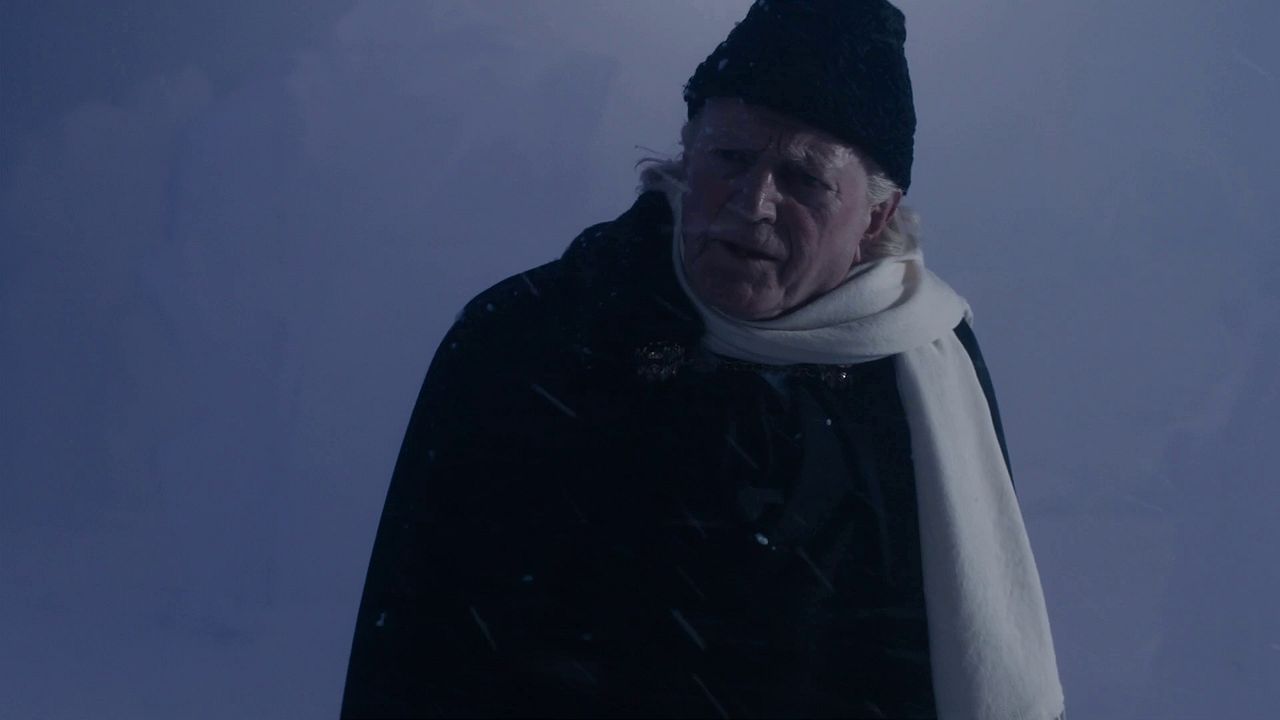
"Hmph. You've stolen the Cybermen from my last story - I should say I should deserve something in return, don't you? Hmm? You great big grey Scots bastard!"
As I loved Robin Hood, anything that evokes it gets a thumbs up from me - especially when it contains armies of flying Tenth Planet Cybermen, two Masters, a pan-dimensional lesbian love-story and the return of the First Doctor as played by William Hartnell as played by David Bailey.
Yep. This is the sort of fanwank that could raise Craig Hinton from the dead.

Poor Steven Moffat has spent all his time since 2009 trying to please the fans and give them what they want without any Faustian twists or "hahah, I'm writing crap deliberately to prove a point no one will realize for decades hence" logic you might find trotted out by Rob Shearman or Phil Sandifer. In 2010, he gave them a new series of RTD-era Who. In 2011, he gave them all the time paradoxes, story arcs, visual gags and River Songs he could. In 2012, he gave standalone stories everyone would like. In 2013, he produced a chain of episodes celebrating each Doctor's era and then tied off everything in a neat Christmas special. In 2014, he gave the fans a dark, gritty and serious show with an older Doctor, Time Lady villain and scary monsters. In 2015, he gave them even more dark grittiness plus fanwank plus Game of Thrones stuff.

And now, after a year off and recoiling from public apathy (you need only see Gogglebox Australia to see how poorly "normal" folk cope with ultra-dark sequel-prequels to Genesis of the Daleks), the majority of fandom made their final request. Make Doctor Who good again, make it a show the not-we enjoy and cherish rather than something isolated and uninclusive. And so Moffat did.

For all the "brand new beginning" aspects thrown around, Season 10 has been focused on the theme of last chances, appropriately enough. The moment to recognize the status quo is untenable and what to do now. It's been in every episode, as characters realize they have to change or die out. If it's the colonists making peace with the Emojibots or the Celts teaming up with the Romans or the British allying themselves with the Ice Warriors, acceptance is achieved and new beginnings made. The Landlord, that twat in Thin Ice, the Oxygen companies and ultimately the Saxon Master all refuse to acknowledge this is the end of the line and they all pay for it with their lives.

I wouldn't be at all surprised if this was all some horrendously-extended metaphor for an exhausted writer turning to continuity spectacle and audience-pleasing favorites to support a clearly terminal franchise in its final weeks...
The Doctor, having finally run out of domestic life with River Song, decides it's time to change. He settles down on twentieth century Earth, educating the pudding brained humans he once despised, working hard to reform Missy instead of just continuing his usual MO. Of course, he's strongly tempted to go back to his old ways with his new friends but that bites him in the arse more than once. Missy, too, realizes she needs to change her ways (though whether or not that involved becoming good is left obscure). Nardole too is revealed to be trying to avoid bad habits, and both Bill and Heather seek to break out of their ruts before it's too late. It's hardly subtext that this is the end of an era and both star and showrunner are uncertain how they want to go out.

It's quite a thought that ten years ago, the climax to the eleventh episode of Doctor Who was quite simply the most epic-brain-blowingest thing ever. It involved a benevolent near-comedy stereotype turning out to be the Master, as played by John Simm. Indeed, it's hard not to see other echoes here - a vast and doomed colony ship of humans who end up turning to psycho cyborgs at the Master's behest, for a start. Near regenerations, flashbacks, cast-changes and a base besieged by an unstoppable army the Master's left to deal with the Doctor while he buggers off sharply in the opposite direction.
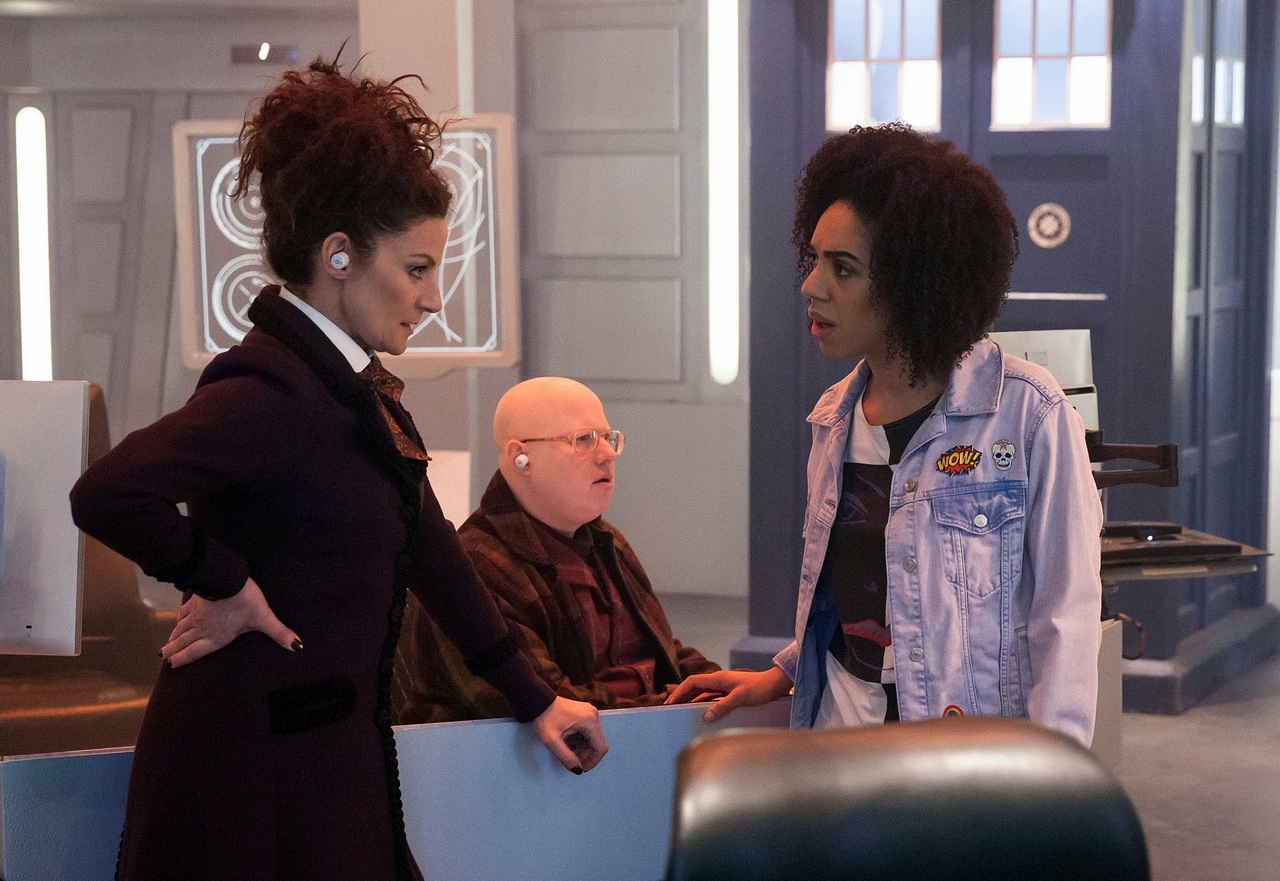
"Zathras tell them but they not listen. No, no. Nobody listens to Zathras..."
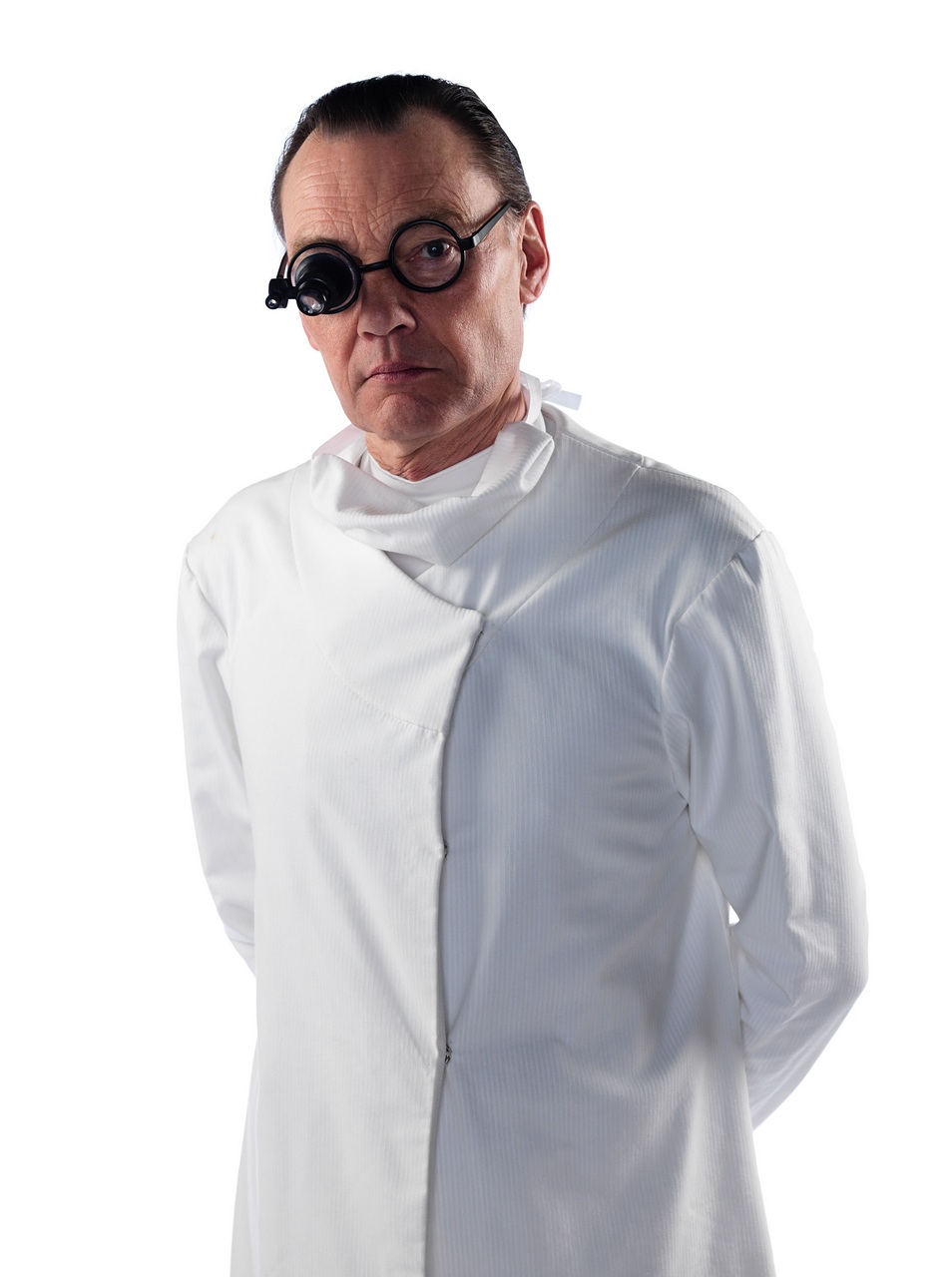
This is the second "Two Masters" story (after BF's The Two Masters) and it doesn't waste its premise. Missy and Saxon flip between best friends, worst enemies, star-crossed lovers and bickering siblings - Saxon is always the nastier and vicious, but Missy is the dangerous one. The variation on multiple Doctor stories is married perfectly to the season's "last chance" angle - in the BF version, the two Masters got on great and unwittingly defeated themselves. Here, the Master is literally their own worst enemy. As the De'Ath Master burned Melkur Master on Terserus to tidy up his own timeline, here Missy pulls a Servalan-esque poison dagger to her predecessor's throat. De'Ath argued that this is for the best, that even the Master's defeats are deliberately of his own making and no-one else's. Saxon and Missy agree with that philosophy but take it one step further in their final showdown - the sexist, misogynist Master destroys his female successor, committing suicide rather than allow the Doctor even the vaguest of moral victories.

"Hang about, if his name really is Dr Who, then all that stuff on Trenzalore doesn't make any sense? They're asking for his name by saying his name? That's like having the secret code-phrase being 'What is the secret code-phrase?'! You are so full of shit, Missy!"

Perhaps the Master will be resurrected by the new regime, but right now it seems the evil Time Lord's gone for good and it matches the appropriateness of hir previous defeats. After dying out of spite, dying to save the Doctor, being killed by the Brigadier, what could be better than dying both because the villain can and cannot change? For all the fiery CGI on display, we never do see a regeneration from Simm to Gomez and instead have the far more memorable sight of them laughing hysterically in their display of mutual murder, like the end of Eat the Rich or The Killing Joke. In a civilization they forced into constant adaptation and evolution, their stubbornness ends them both. Of course they were going to laugh!

"Chronic Backstabbing Disorder? Hey, we resemble that remark!"


Could Missy have turned good? We may never know, and perhaps in a wibbly-wobbly paradox the reason Missy was even open to the idea was the subconscious knowledge she was properly doomed. The Doctor challenges the pair to wonder just where and when they're willing to die, and we know at least Missy wanted it to be with the Doctor while Saxon wanted it as far away as possible.

"Run off with someone I just met? Who do they think I am? Susan? Or Vicki? Or Jo? Or Leela? Or Romana? Or Sharon? Or Turlough? Or Erimem? Or Mel? OK, maybe Mel..." Nardole regrets clicking on the spoiler threads on Outpost Gallifrey.

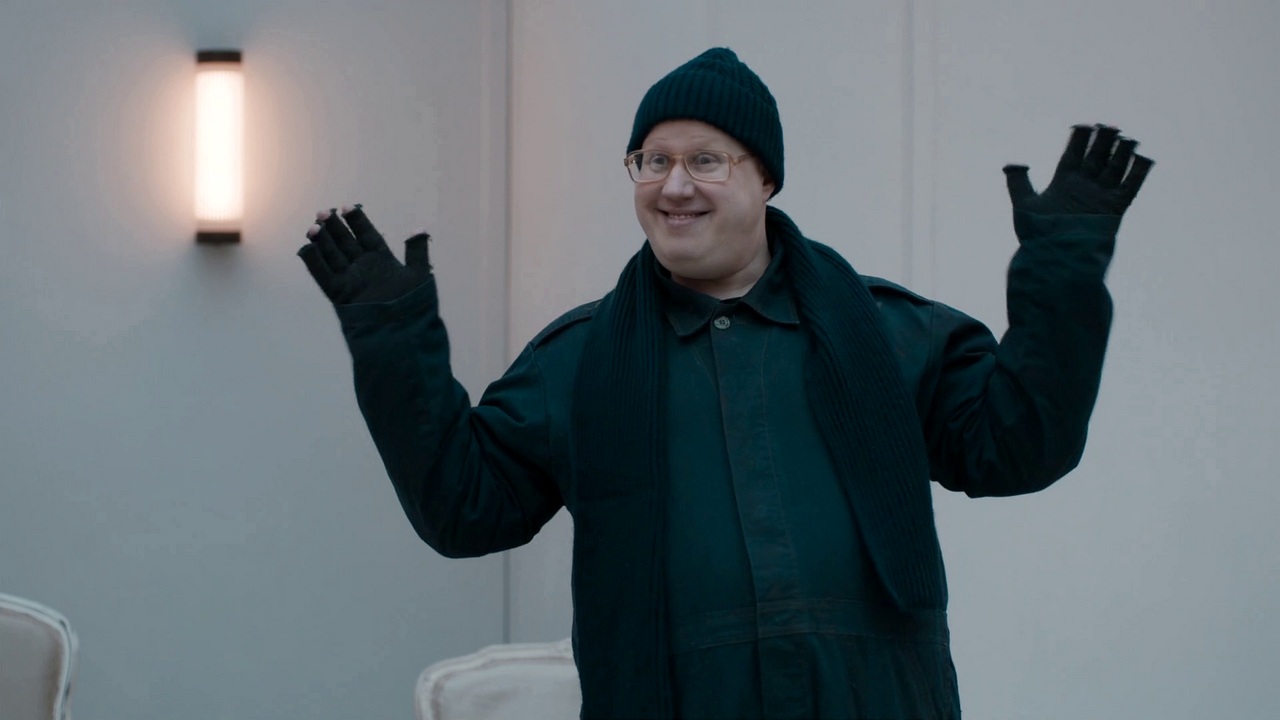
Missy's not the only regular written out, of course. Nardole concludes his rather slipshod internship in a blizzard of Britcom cliches (see Little Britain as he casually triggers thermonuclear destruction without looking up, Coupling as his drinks clink with a love interest, Goodnight Sweetheart as a time distortion leaves him stuck on the wrong side of the looking glass). We still know nothing about him except he was once a very unsavory character who has been partially reformed by the Doctor and River Song. His final fate is not dissimilar to River's, condemned to live a pastoral life with children and friends but the nagging realization he'll never see the Doctor or the TARDIS again as well as the dread this happy ending is very much running on borrowed time. The Doctor's loyal butler let him blow up, but unlike Alfred in The Dark Knight Rises, the chances of him seeing his former employer alive and well later on are non existent.

Even so, Nardole, you'll be missed.

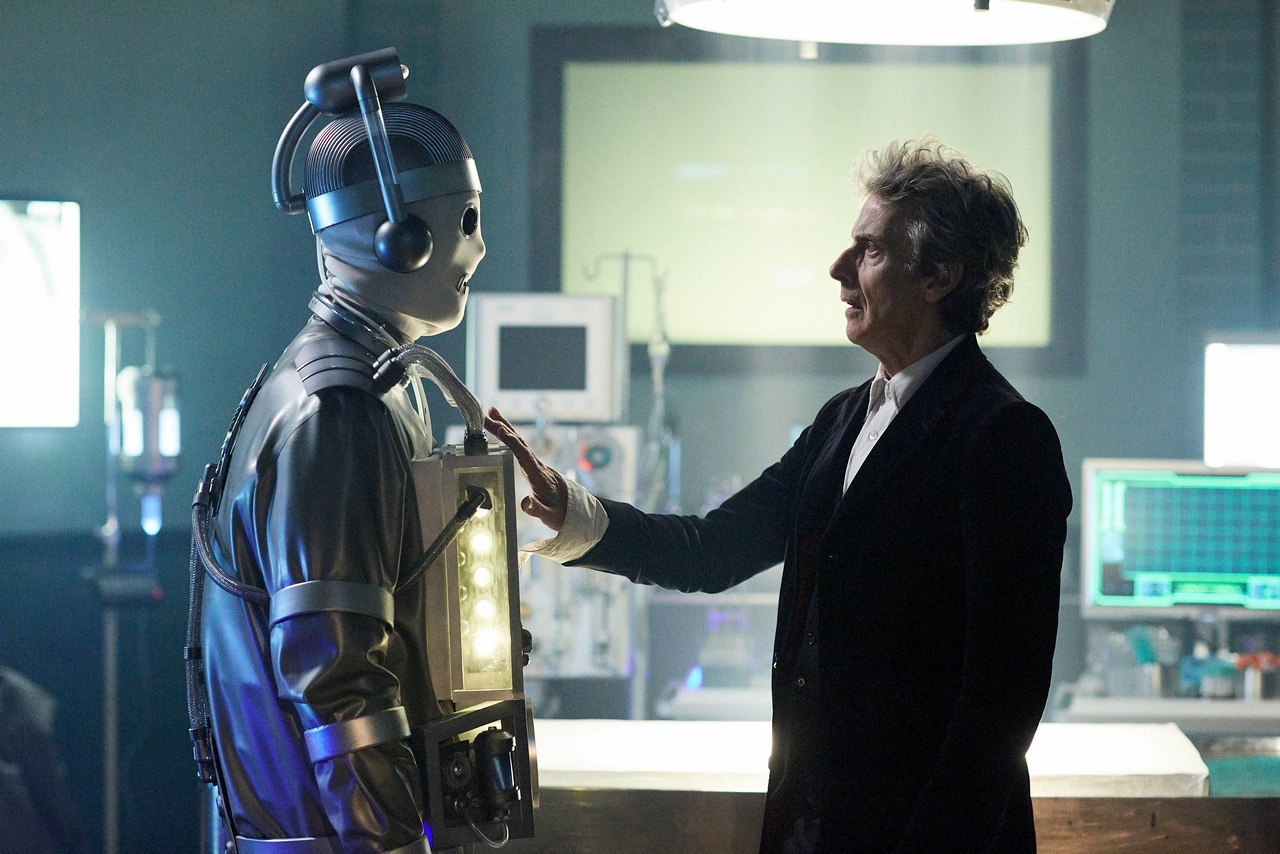
The Mondas Abbey Road album cover.


Bill's excellent and/or bogus adventures come to an end but for the first time since Martha Jones we have the suggestion she might be back next year. Normally companions have the doors locked after them, but there's every possibility she could be back. Or we might never see Bill again, but at least she gets a decent, happy ending. There's none of the angst or doom weighing down on her predecessors, or even Nardole, and it feels like a reward after seven years of Moffat grinding characters under his heel for his own sadistic pleasure.

No doubt some would have relished Oxygen or Extremis or Lie of the Land had she actually died in that, but instead these near-misses have forced Moffat to finally fulfill his desire to inflict the nastiest of all possible fates on a companion. And let it stick - because we saw too soon Donna's face hadn't really been cut off and stapled to a statue and she was fine, and Amy got over the whole "forced to give birth at gunpoint and watch child melt" quicker than I have the dreaded flu. How many times has Moffat killed off a companion? Death, arguably has lost meaning, which is why he goes one further.

He turns Bill into a Cyberman.

"OK... don't panic, Bill, this can still work. I mean, everyone loved Kroton..."

Her initial death (complete with Lock/Stock/TwoSmoking Barrels style gaping hole in her torso that vaporizes her heart, lungs and most importantly boobs) is little more than a plot-point emphasizing that the Twelfth Doctor is rubbish at keeping his companions safe. This is the point where their dumb luck runs out, leading to Bill's ultimate departure, the realization this fun life is like the Doctor: fatally-flawed.

Bill is resurrected in minutes of both screen and story time before she gets another Moffat torment - forced to live an empty, false life waiting for the Doctor to catch up with her. Saxon says she spent ten years down below (though the counter suggests closer to three), deprived of any real human contact and trapped in a madhouse full of muted zombies begging for death. Like Rory the Auton and Oswin the Dalek, her retained humanity is a torment and she can barely control her killer instincts and blowing up her own side. Her emotional strength leads to a fugue state barely more than madness and when she finally keels over in her Mondasian get-up it's hard not to think of it as some kind of relief.

It's been made clear no one can change Bill back, that she's past the point of no return and the biggest kindness the Doctor can give her is to blow her head off. So how can she possibly be saved? For all the timey-wimey history reboots, both Rory and Oswin were only saved by the ones they love and it feels perfectly right that Bill's love Heather returns to sort her out as promised (and getting three times the dialogue of her first episode). The final scene with them in the TARDIS discussing their future almost felt like this would be a reboot with Heather replacing the Doctor as the time-traveling wanderer, and certainly not the raw fanfic fuel of Clara and Ashildr flying off in their own TARDIS.
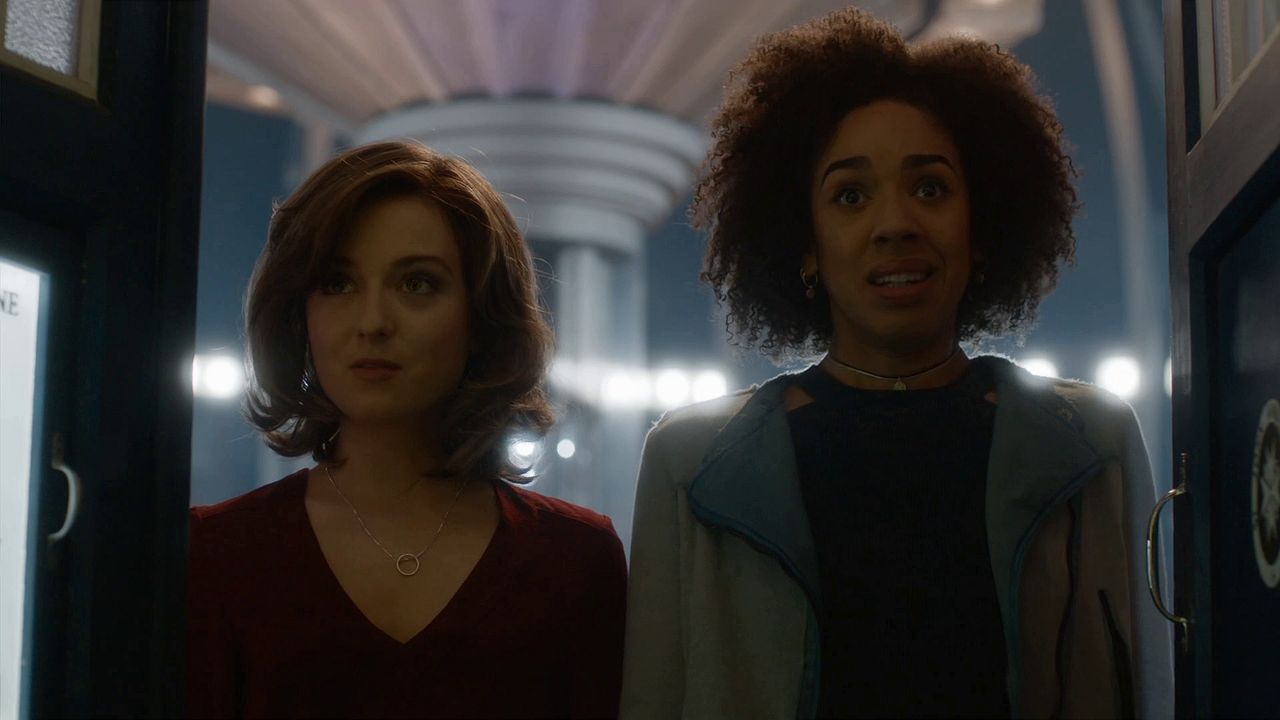
"Marriage equality? Where we're going, we won't need marriage equality..."
Bill's killed off, brought back to life, falls in love and can still come back - yet its probably the least complicated departure story since Donna's and our last sight of her, leaping into the unknown with a huge grin and the girl of her dreams at her side, ends her story on an unequivicably happy and upbeat note. Oh, Pearl, if this is the last we see of you then at least we saw you at your best.

Moffat-cliche # 347123 - young girls on the Slow Path watch Doctor Who on TV
Onto the Cybermen. Thanks to RTD's parallel universe idea, Moffat has expanded the idea of Mondasian Cybermen and Cybusmen into even more divergence. Like the idea in BF that vampirism is a phase all humanoid life goes through, the idea here is that Cybermen are a cul-de-sac many varied and different civilizations fall into. While the Cybermen we see in this story are converted from Mondan colonists, they're not the same ones who storm Earth in 1986 on Mondas. These Mondans are a completely separate group who fall foul of the Master, who screws up their environment and paints them into a corner where they inevitably evolve into cloth faces and jug-handles (which we now know are for emotional inhibition, because otherwise the pain of conversion would drive them to suicide).

++"Delete"? I'll give ya "delete" ya young whippersnappers!++

Moffat throws a cheeky wink here at the various other origins of the Cybermen by bluntly saying that they ALL are equally valid. The Cybermen were created on Mondas like Spare Parts showed, but also on Telos as all those Target introductions by Kit Peddlar did insist. And Planet 14 and Marinus as well! Yes, Moffat went on TV and canonized The fucking World-Shapers! (Well, to an extent, given The World-Shapers contradicts itself so often that the matter of Old Jamie, the Voord and Time Lords effectively cancel each other out). The point is, man will grow proud, god will punish them for their hubris and the next thing you know, the Cybermen are everywhere. It even ties in with other stories like The Mahogany Murderers, Industrial Evolution, Hope, The Girl in the Fireplace, Subterranea and The Heroes' Stories to show other flesh-steel variations could turn out to be the next generation of Cybermen if given half a chance.

Be they armored soldiers to fight a war, upgraded experiments-cum-butlers, or a fashionable intermix of technology, the Cybermen will always keep turning up. Hell, what else are the Toclafane when all is said and done? Remember, Telos means "logical endpoint" after all. Sooner or later, there will be machinery that needs people for organic fuel and removal of emotions. Moffat always cited Victory of the Daleks as an attempt to turn the monsters into a continuous ever-present threat. Well, he managed that with the Cybermen, but he's still left Skaro's finest looking like crap... literally. Will the next Christmas Special finally given them a decent outing?

Somehow, I doubt it.

The Cybus-Men show off their awesome blanking-people-in-polite-society power.


And so, to Capaldi's Doctor. Again, he is defined by the fact he's basically not good at his job of being the Doctor. He couldn't keep his oath to keep Missy trapped, he couldn't keep Bill safe, he can't even die properly. The Doctor's final, desperate half-arsed rant to Saxon and Missy of why he would choose to stay and fight a pointless battle on the slim chance of saving some innocent bystanders sums it up. He gets nothing out of it, not even the satisfaction of a job well done, but he has to try.

This Doctor's whole journey from Trenzalore onwards has been trying to recarve his place in the universe, and he's frankly not done well but that's not the point. As he said in his first episode, he is not expecting to get into the Promised Land any more. He's not after a reward. He just wants to be able to live with what he does.

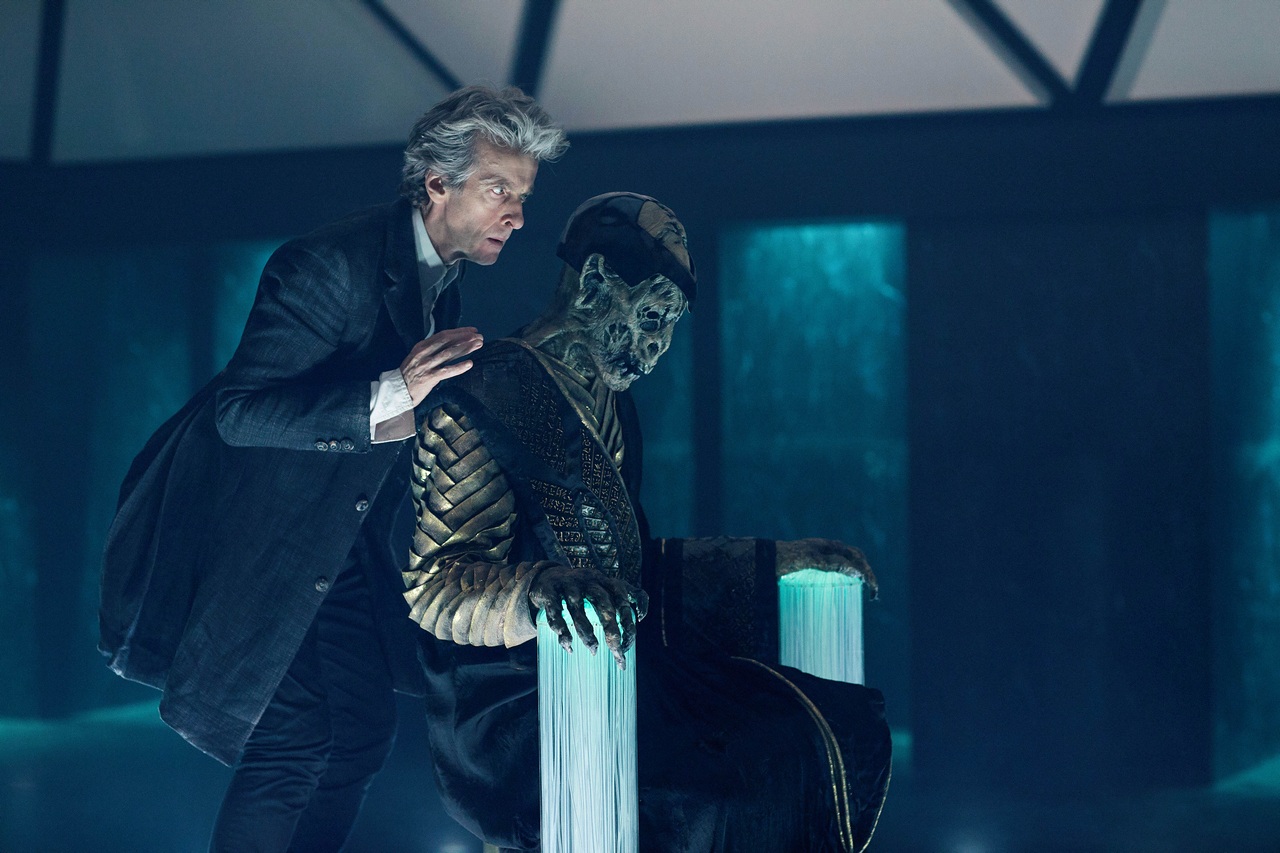
The Master tactfully decides not to compare and contrast Moffat and RTD's epic finales.

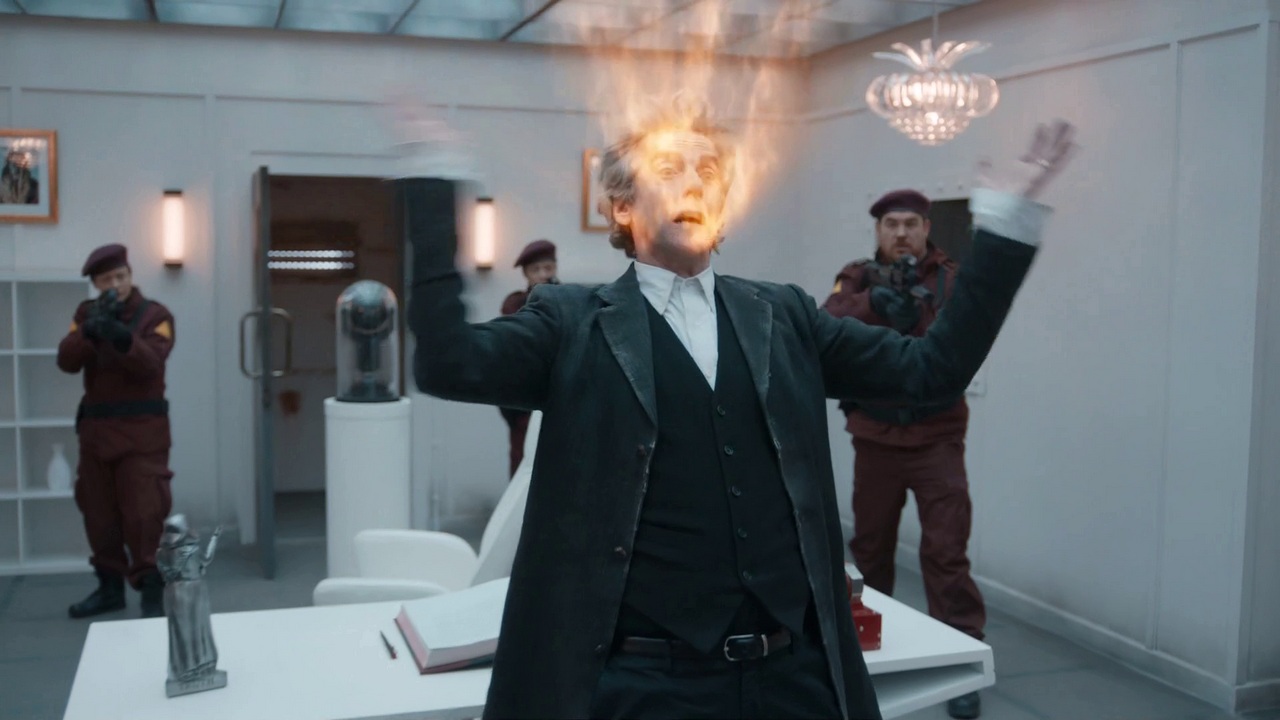
And like Trenzalore the Doctor once again chooses to save a bunch of gormless farmers from an army of Cybermen with his mortality very much on the line. In Deep Breath, the question was raised of just how much of the original Doctor is left. The Doctor has committed the sin of living on past his own time when he should be dead and buried, a Doctor who is in his own words "a clerical error". He wastes regeneration energy like water on Skaro, and here he's shooting off fireworks every few seconds. It seems an electrifying bear-hug from a Cyberman on top of some pistol whipping by Saxon and then being caught in a shuttle crash has burnt the candle at both ends. He collapses at one point two weeks later, fighting off his regeneration - before getting repeatedly shot and caught in the heart of a massive explosion.

(Though his NuWho Logopolis-style regeneration flashback montage doesn't feature Micky, Wilf, Rory or Strax. Which bugs me for some reason. It does feature Rose, Martha, Donna, Sarah, Amy, Clara, Vastra, Jenny, Missy, Nardole and Bill.)

The Doctor refuses to regenerate, having seemingly tried a new lease of life and finally got sick of it. When one of Bill's special water tears reboots his body, he's still determined not to let himself transform and of course the TARDIS responds by dumping him in the Arctic at Christmas 1986 where the Doctor is about to undergo his OTHER first regeneration for the first time - which in turn neatly ties in to the latest BF boxset as the Time War attempts to undermine the events of The Tenth Planet.

Awesome moment. Never happens in the episode, but still better than The Tenth Planet.

Hartnell didn't get a decent farewell, all told. But perhaps this time, it'll be different.

It is, after all, our last chance to change things...

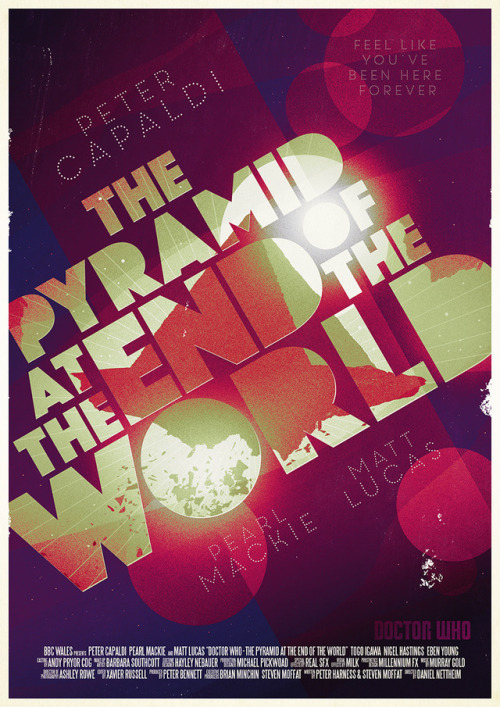
At last, another bloody poster! I haven't been able to mock one of these for months!

And so, Whovians comes to its end and dear god let it not come back the same. Without variety, the best humor comes from the off-the-cuff remarks from comedians rather than the labored gags Rove engineers. The He Who Knows segment is just a five minute segment of crappy photoshop and Who-related insults involving said photoshop. The Doctor Who auditions were, at the end of the day, ruined by giving ABC personalities some random fanwank to spout and unsurprisingly Barry Cassidy came off best, playing the Doctor as a pacing, aggressive tactician working out his moves with the help of his companions. Kitty Flannagin wasn't bad, mainly because the humor was her oh-so-witty stubborn refusal to listen to anyone and assume she was auditioning for ER. Everyone else was trying too hard or quite clearly had no idea what they were actually doing (like those harpies from the Checkout who could only make Jedi jokes).

It appears the prick from He Who Knows actually comes up with most of the scripted material, so Rove at least is let off. His enthusiasm is genuine, his affection is true and he doesn't give himself the easy task of trying to control an audience who've just watched a Who ep and want to talk among themselves. Only when he's high-adrenaline "WOW!" behavior collides with the sleep-deprived British guests does it seem inappropriate - like the grown ups in Cardiff are patiently dealing with a hyper child. As for the guests? Tegan's not-in-depth obsession is a counterbalance to the other hardcore folk, and Adam Richards is quite tolerable when not being asked to come up with ridiculous theories every minute. Bajo has either two settings, both of which are offensive, and even makes George Christiansen a more pleasant co-host. Cal Wilson improvs everything, proving effortlessly entertaining and never once convincing you she even remembers last week's episode, and Celia... oh, Celia.

As Micallef pointed out, the format was essentially flawed - watching a bunch of "nerds" describe an episode you've just watched as if their opinions actually count for anything is lame. Some have suggested if it was less chatty and more active, sort of like Spics and Specs with quizzes and activities, it would have a better rhythm. "True or false: the Doctor once said on screen he was best friends with Chairman Mao. The first word a Sontaran says in Doctor Who is "peace". You can see John Barrowman's cock out during the regeneration scene in The Stolen Earth." "Describe Into The Dalek without mentioning Daleks." "Identify this target novel being sung." "Draw charades of a monster name..."

Oh well. They tried, but I'm more annoyed Whovians got regular publicity and Doctor Who didn't. The irony is, everyone in Whovians would be just as pissed off.

"Old age, executed, radiation, fell off a radio telescope, toxic batshit, radiation again, open-heart surgery, space-ship crash, old age again, absorbed the time vortex which I guess counts as radiation... oh bollocks, I've run out of fingers!"

Saturday, 24 June 2017

Doctor Who - Celtic Legacy

So. Eaters of Light. What to say about that?

"Don't cry, mate. John Simm and the Cybermen are in next week's episode."

Well, it wasn't bad and certainly maintains an acceptable level of entertainment laid down by the rest of the season. No bad acting, a straightforward plot, even some nice mockery of Game of Thrones that a septugenarian Tat Wood will have to explain in a future About Time book in between ranting about his childhood nostalgia and total disgust for you foreign wops who don't appreciate beans on toast.

But there's not much to say about it.

Fighting Like Animals, Dying Like Animals: ACTUAL FOOTAGE

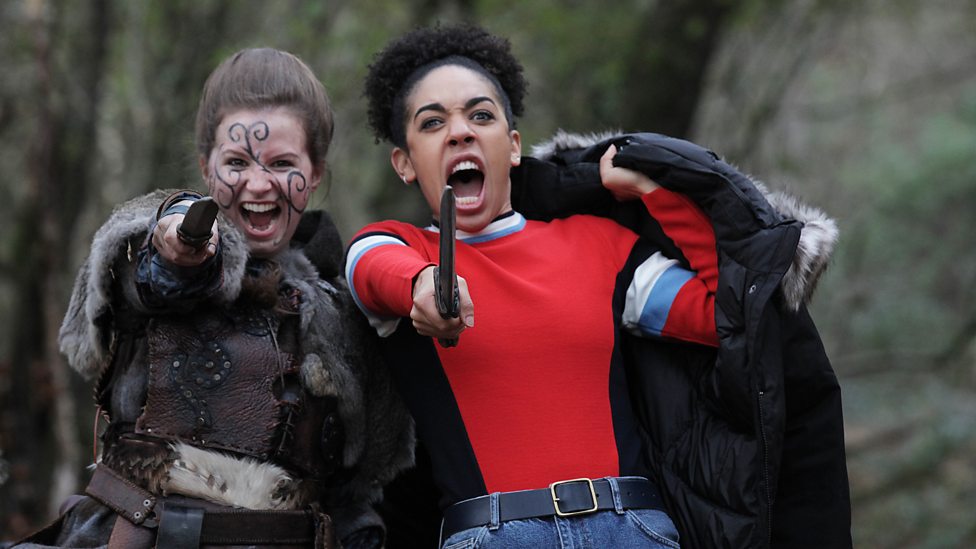
Even a smug "hey, it's just like Survival with the Doctor, his tomboy companion who fancies girls and a subtle Master on a barren conflict-ravaged magical world where the feral natives are combining with more civilized invaders as a greater, unexplained power consumes them both plus some talking black animals hang around being pointlessly sinister" comparison feels a waste of time.

The whole episode could have been swapped with Thin Ice for all it matters, given its Eurocentric historical status. Not bad, but for a show about to dive into season finale - and era finale - it's the most disposable and skippable episode since Fear Her. Pretty much every penultimate episode from Boomtown to Utopia to Closing Time to Nightmare in Silver have cranked things up a notch. There's no sense that things are spiraling out of control, that a final battle is upon us, that it's time to put down our dundee cake and start taking things seriously because shit just got real.

To think, back in 1989 the lesbian stuff was subtext!


Eaters of Light feels rather like Ms. Munro wrote a three-part story but they only filmed the last two episodes. We miss the carnage of the slaughtered Ninth Legion and learn everything from hearsay, mainly the Doctor shouting things. This kind of worked in Survival as he was the only one who could think clearly and the werewolf-style narrative was self-explanatory. The nameless monster barely gets any explanation, or even justification. If it eats light, um, why does it have special tentacles to mummify humans? Why aren't they happy with the light of their own dimension? What does that have to do with the talking crows? Who carved the image of the TARDIS on the stone? Why does music play in the hill when it's nigh irrelevant?

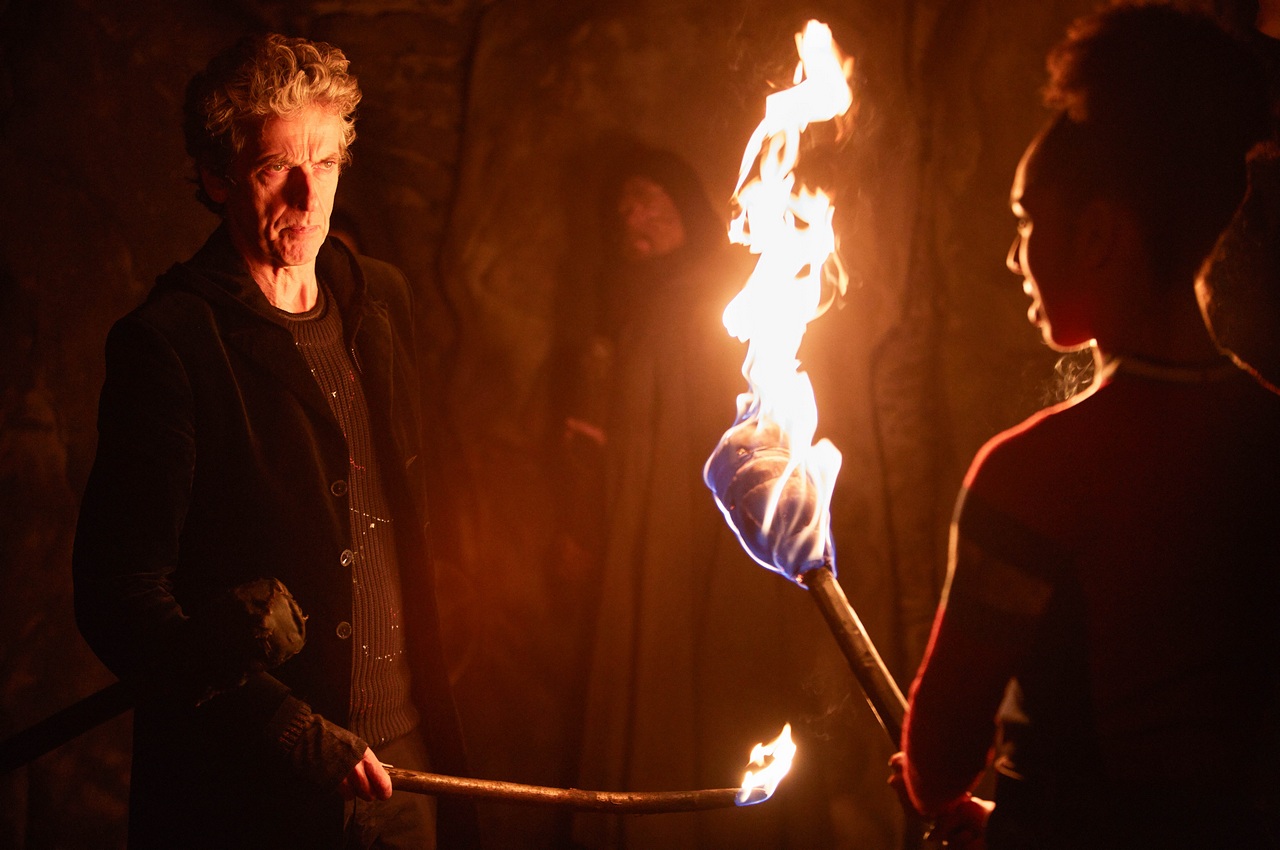
"And why are you holding a torch for me? You're gay. Much was made of this!"

When you think about it, Survival was crap in the terms of actually explaining itself. It didn't even name things except "Cheetah people" "Cheetah planet" and mumbled something about the power of an animal that can destroy you unless it doesn't. When the Doctor suddenly announces his cunning plan involves a hitherto unmentioned heroic sacrifice, it's borderline tedious waiting for the other characters to do it for him. There's none of the lingering consequences you'd expect from the last standalone ep in the series, like the Doctor and Clara swapping places in Forest of the Night or Clara dying in Face the Raven. Earlier in the season, it wouldn't have felt so damn throwaway. Worse, there are clearly a lot of random cuts - the Doctor refers to dialogue he hasn't heard about, Lucius has a nickname Bill knows but we don't, and obviously the stuff about the black slime made sense in an earlier draft.

"Is it just me, or would this work better if I was dressed like Ronald McDonald with a bubble perm and you were a wisecracking three-foot-tall CGI Emperor Penguin?"


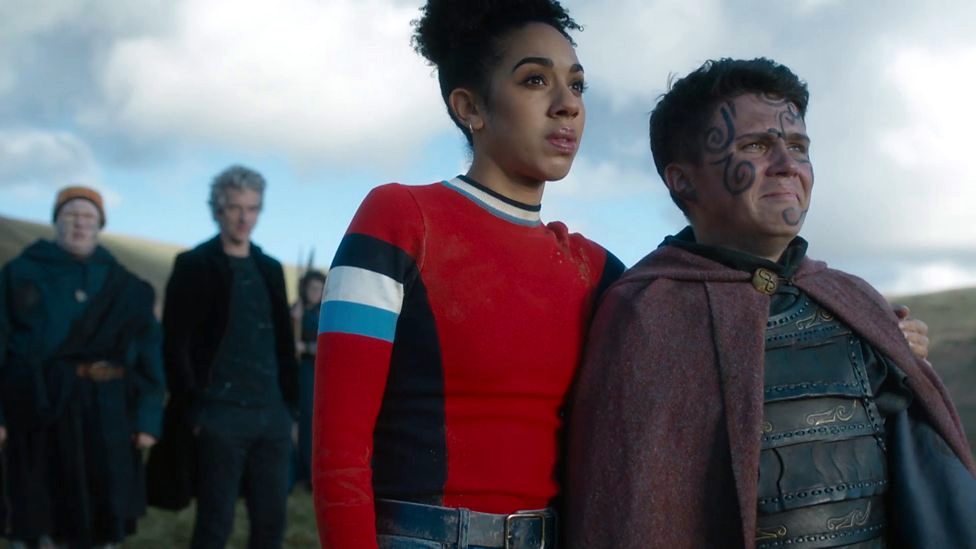
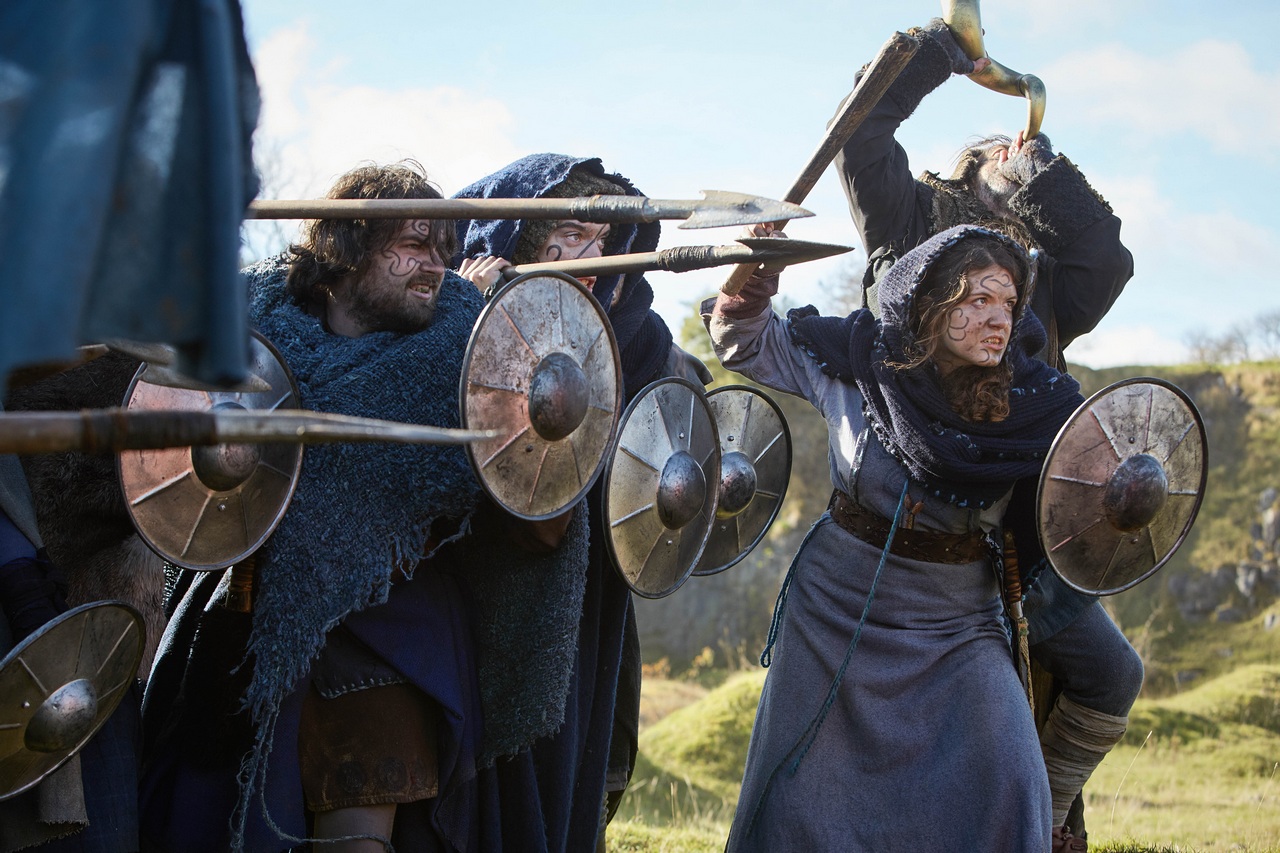
Although the Doctor's "we fight like animals we die like animals" speech is better written than the one in the previous episode, the fact is it's more exciting seeing redcoats and Ice Warriors about to kill each other than some face-painted wildlings and Rory Williams cosplayers. Instead of chaos unfolding in apparently real time, days pass between scenes and the threat of the villainous unnamed dragon thing remains abstract. It eats two speaking parts and is defeated by some unknown material that poisons daylight. What's more, the story resolutely stays in prehistoric Scotland and, although it definitely looks nice, the narrative needs to see what's on the other side of the gateway. Imagine Survival if there had been no scenes on the Cheetah Planet and just had characters vanish and then reappear later without explanation?

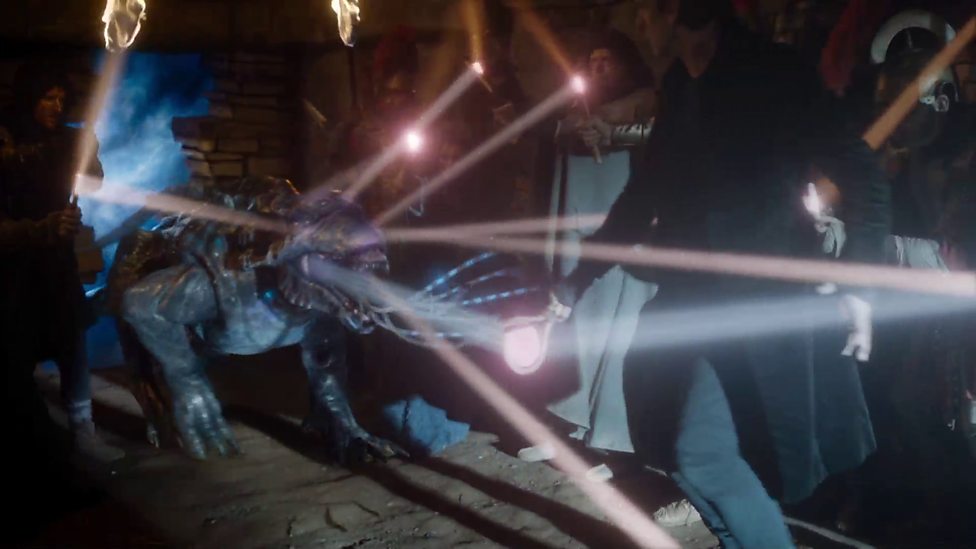
"THE MEDIOCRITY... IT BURNS!!!"

(Apparently there's a whole aspect I missed with the pre-credit sequence set in a parallel timeline where the Doctor was killed off, and the bookended final scene with the TARDIS not carved into rock and the crows not calling his name refer to this alteration. Um, OK. File that along with "why people were killing themselves in Extremis" as Stuff I Needed TV Tropes To Spoon-Feed Me).

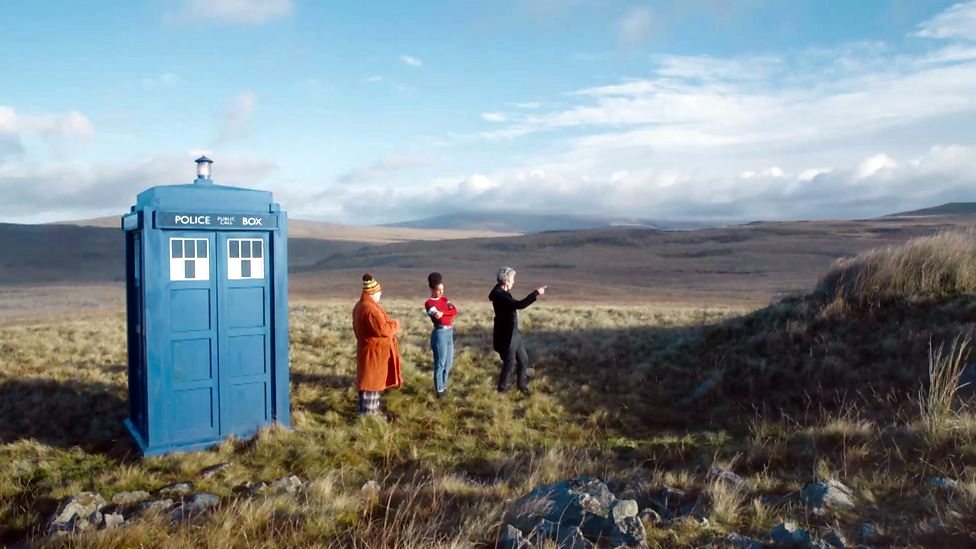
"And over there, if you squint, you can just make out relevance to the ongoing story arc..."


So, yes, it's not a bad bit of Doctor Who but after the Monk trilogy dominated the middle of the season it has in turn rendered stories with more understandable threats less trivial. Yes, Martians might invade 19th Century Africa... but they won't, because it only gets one episode. The Eaters of Light might consume all life like that Genesis song... but it won't, because it only gets one episode. It's shameful that you can't disagree with Whovians that the trailer for next week was more exciting than the episode that preceded it, though even then there's a note of disappointment as we have a trailer that doesn't try to make the story interesting for new viewers. What the hell is Mondas? What's a Mondassiansybemen? Is that something to do with the blue people from Oxygen coming back? Who's Mr. Beardy and why is his yearning for a snog in any way supposed to entice me to view?

Bill finds herself in one of Amelia Williams' less-disturbing sexual fantasies.

Yeah, there's no doubt that after a confident start, this season has stumbled. Hopefully it won't fall flat on its face like the last two.


So, to pad out the review... wow, I'm doing a lot of that nowadays, I'll see if I can identify those thirteen clues from the Radio Times... though they mostly appear to be hats

1) A presidential button and some dynamite from the Monk trilogy maybe?
2) The forbidden number 507... no idea
3) A copy of Northanger Abbey... um, nope, no idea what that refers to
4) Missy's hat from World Enough and Time
5) Spacehelmet from Oxygen
6) Frost fair poster from Thin Ice
7) The Landlord's tuning fork from Knock Knock
8) A Movellan handgun from The Pilot
9) An emoji from Smile
10) A Victorian spacesuit helmet from The Empress of Mars
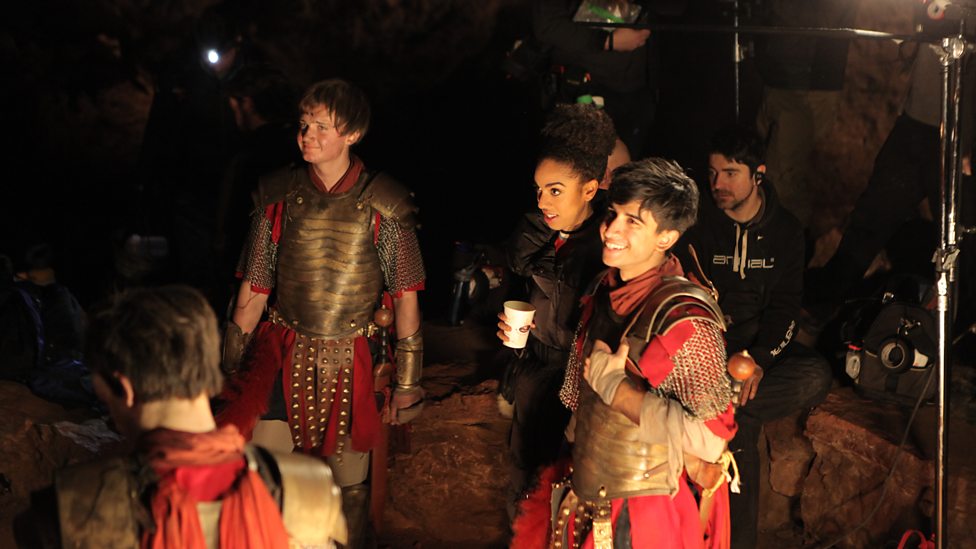
11) A centurian's helmet and the monster-defeating crystal from The Eaters of Light
12) A triangle. Something to do with the Monk's pyramid?
13) "4.367 LY" presumably something to do with the finale?

Missy finds my inability to work out the answers endearingly retarded.

Oh, Whovians was crap. You probably knew that. Shaun Micallef certainly does.

Saturday, 17 June 2017

Doctor Who - Dead Pasts

So. The return of Alpha Centauri, complete with the original voice actress - something not even BF achieved.

I think it's safe to say I didn't see that one coming.

"Ha. 'See that one coming'. Eye-humor. Never gets old. Sheesh..."
As opposed to pretty much everything else about The Empress of Mars.

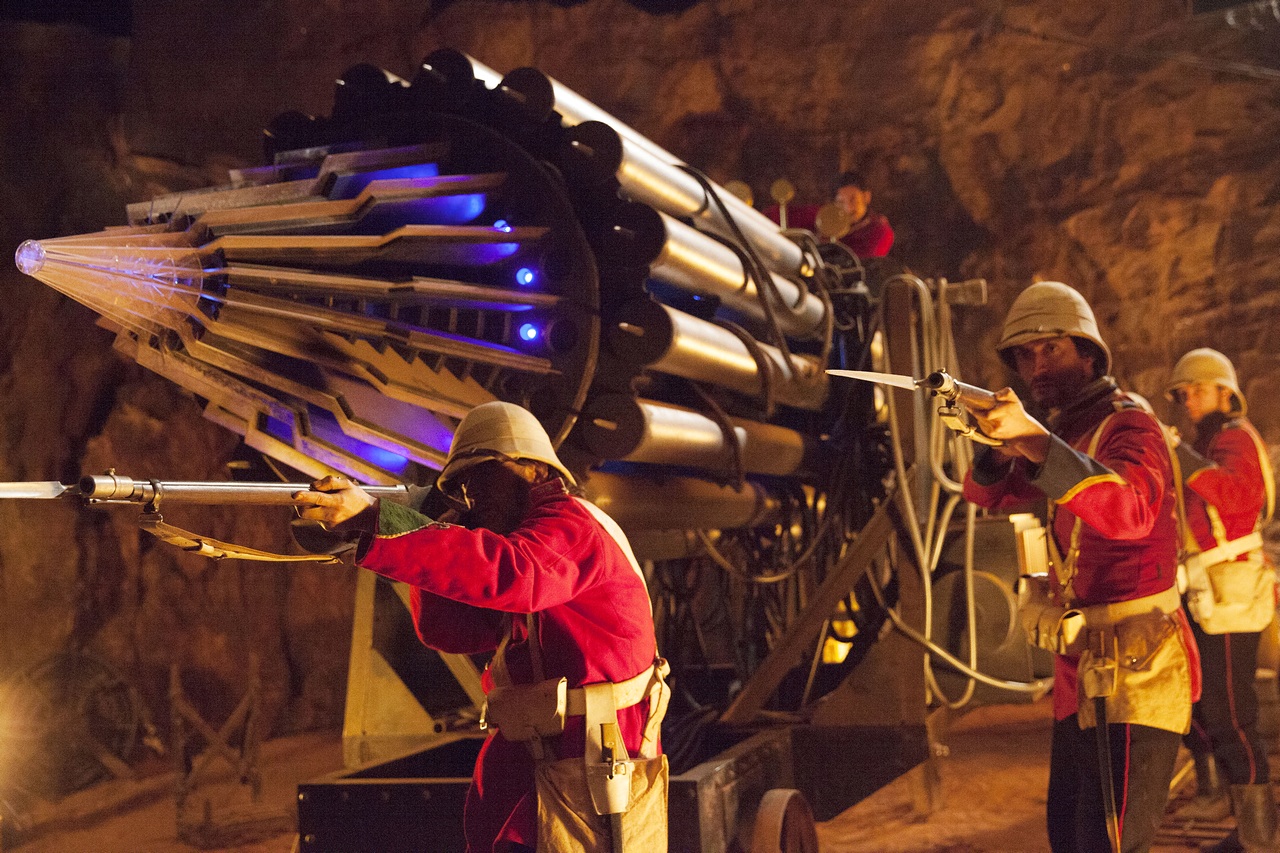
But, of course, it would be utterly hypocritical of me to actually complain. Certainly, Monsieur Gatiss' episode maintains the acceptable level he's reached since the crap-ectomy of The Idiot's Lantern, Victory of the Daleks and Night (spit) Terrors. It's not as effortlessly enjoyable as Robot of Sherwood, or as high-concept as Sleep No More, but it's certainly not a bad episode. It's just that it treads well-trodden ground so often it's no wonder Ice Warriors can easily climb through it.

Not only is this clearly in every way a sequel to Cold War, with morally-conflicted Martians and human soldiers trying to strike an accord, it's also a blurred rehash of Destination: Nerva, Imperial Moon, and any number of Torchwood tales. As it is 1881, barely three years after the institute's inception and Pauline Collins' portrait being standard kit on extraterrestrial redcoat missions, you think it might be mentioned that Victorian xenophobic jingoism might have some form for this. The expedition leader (did he have a name? He was the boss in New Tricks, too, and even less effective there) is so clearly a broken man yearning for a clean break that the biggest shock of the reveal he's a conscripted deserter is the idea we didn't guess already. Subtlety, never Gatiss' trademark, is in short supply.

"A blue crystal from Metebelis III... can I trade this for the sexual favors of a nun?"


There's no surprises here, all surgically removed in the pursuit of some idealized 1970s Saturday matinee First Men on the Moon style escapism. The characters are all black and white (or green), with women being smart and men either being good or irredeemable scum. They're jerks even by Victorian Value levels and the scene where expedition leader boggles at the idea a woman could be a police officer is certainly not as thought-provoking as Joan's racism in Human Nature. Indeed, Bill's skin colour is never mentioned, nor the other token black guy in the expedition (who, although he's bullied, is criticized for being the new boy and poor rather than of inferior genetic stock).

Compared to Gatiss' own adaptation of HG Wells' works, this is ready head-against-brick-wall stuff. The idea the British Empire would want to conquer Mars, enslave the natives and strip it of all mineral wealth isn't exactly novel, nor is it ridiculous. But there'd probably be a slight delay between the first Englishman on the red planet and adding Mars to the official British territories. NuWho has recoiled in total disgust from the parasitism of the colonial days, but this makes the bad guy of Thin Ice look cultured and nuanced. The British here aren't simply expansionist imperials, they're immoral conquerors and damned proud of it! They'd happily slaughter each other for riches and power, and ye gads man, they're BRITISH! WHY ARE WE STILL TALKING ABOUT THIS WHEN THERE'S VIOLENCE TO BE DONE?!!?

Theresa May campaigners build up her election profile the only way she knows how.


Frankly, it rapidly spirals away to the point the driving moral point - should the Doctor support his beloved humans even when they're in the wrong - vanishes and frankly the audience just waits for the ungrateful redcoat scum, all of them too violent and trigger happy to offer anything to the gene pool, to be wiped out. Even the Ice Warrior rampage loses any fear or anxiety because someone has decided that instead of the old "sonic beam bursts all your internal organs and shatters your bones" version is stupid and now people blasted by Mars' finest apparently undergoes an instantaneous Rapture and their empty clothes are bundled up into a neat ball and thrown across the set. If anything, you're left wanting them to suffer more.

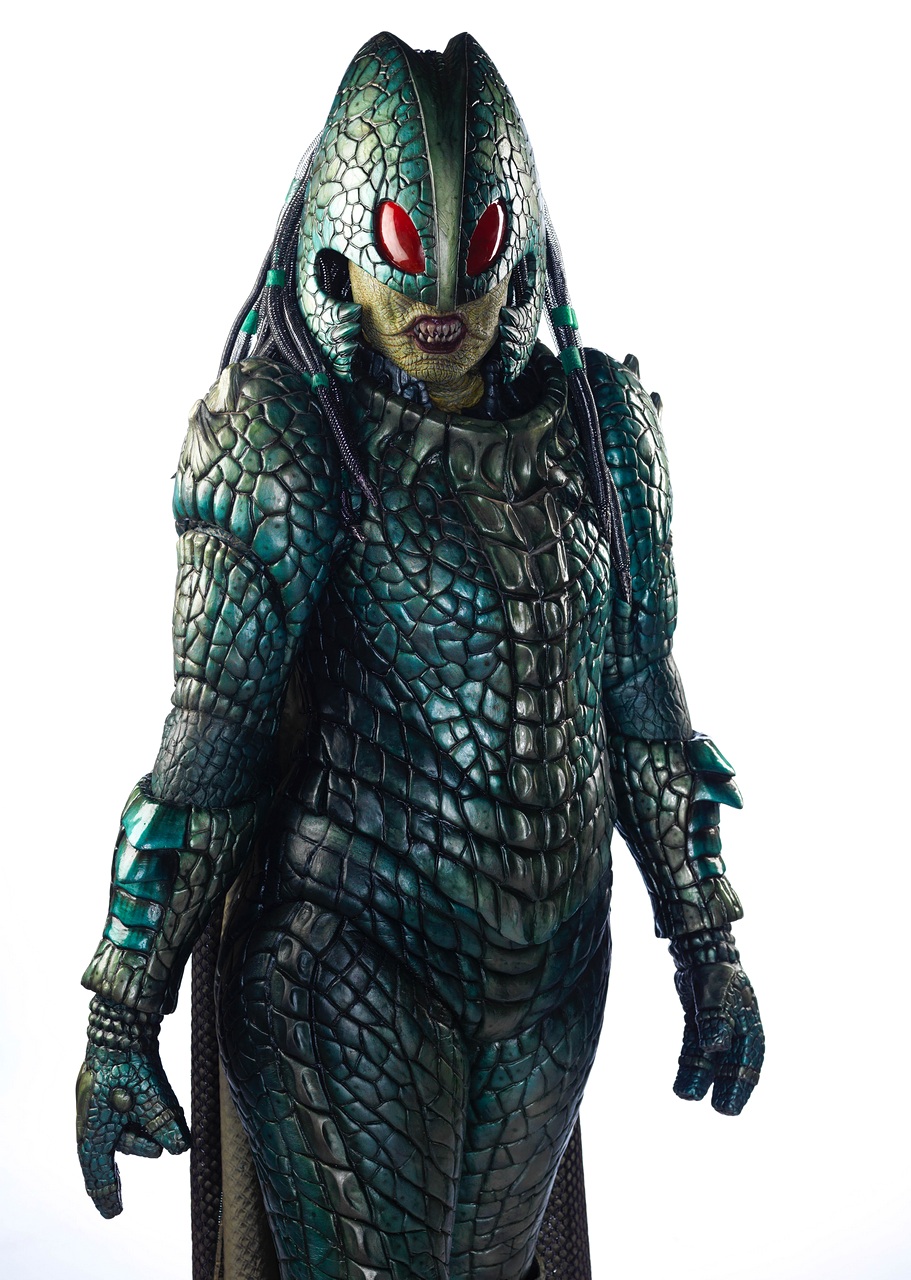
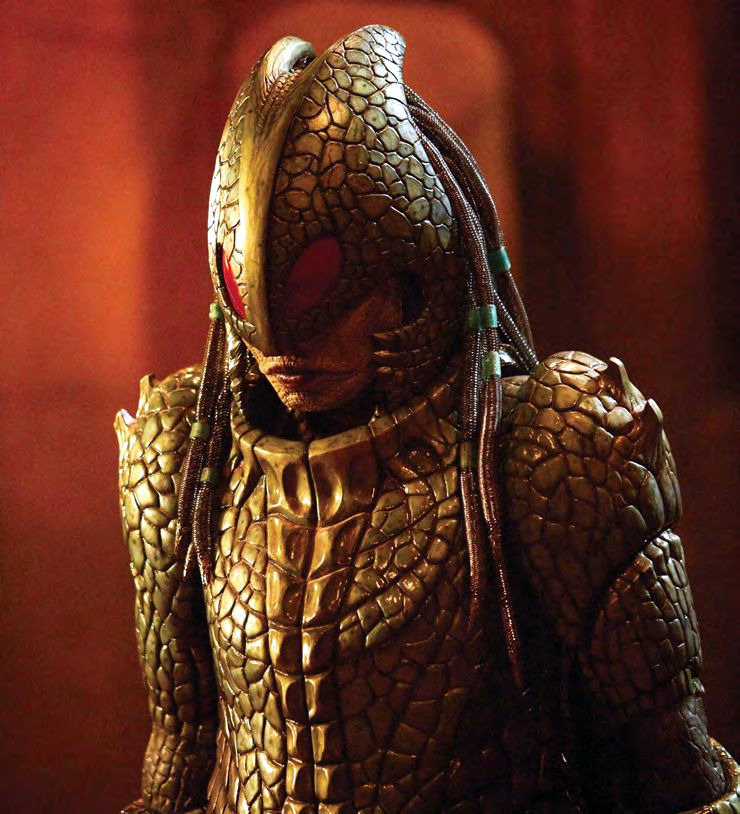
The aliens come out of this story best, with Man Friday's calm glowering when - like the Daleks before him - he gets left to serve tea to male British cliches does NOT lead to him wanting a jihad against all mammals matching the titular Empress being so reasonable the explorers need to repeatedly shoot her in the head in order for negotiations to break down. Alpha Centauri's appearance, where s/he unhesitatingly welcomes both humans and Ice Warriors to a universe of multicultural tolerance, might as well wave a sign with hir six arms saying "VICTORIANS SUCK!!!" for the delicate subtext involved.

Neville Catchlove contemplates being crowned "Biggest Cunt Of All Doctor Who Villains Ever".

What is it about Ice Warrior stories that they bring out the utter bastard in their human foes? In Brian Hayles genesis story Lords of the Red Planet, they were mistreated zombie clones used to wage genocide by a scaled Servalan. Red Dawn similarly has a human astronaut prove to be ridiculously, needlessly ghastly when an attempt to defrost the Martians occurs. Zara and her boyfriend in The Judgement of Iskaar were so pigheadedly bigoted and back-stabbing it made a tale of already-dubious canonicity worse, and of course the Ice Warriors are the most likeable and politically correct characters in Mission to Magnus. When it comes to upright lizards disputing with mankind, the Ice Warriors seem to get more hits than misses than the Silurians when they try the same thing. Odd that.

The Ice Queen realizes she is the least cliched female character Gatiss has ever written.
Mind you, the Ice Warriors here do not have such unutterably pointless sequences ripe for mockery even in Gatiss' childhood. The scene where the Empress is awoken by a gold-digging soldier who drugs his superior officer while screaming at the top of his voice his intentions, long-term career goals and how he plans to somehow steer an alien space craft he can't fly or even get inside without a spacesuit he doesn't own, is soul-destroying. While anyone who can make it through Black Guy's "Hey, see this picture of my beloved I've never referred to before? I'm going home to Earth tomorrow to marry her and we'll be happy, so I sure hope nothing bad happens in the unfeasibly short space of time - oh wait, I'm dead" scene without vomiting blood deserves either a medal or a fullscale psychiatric assessment.

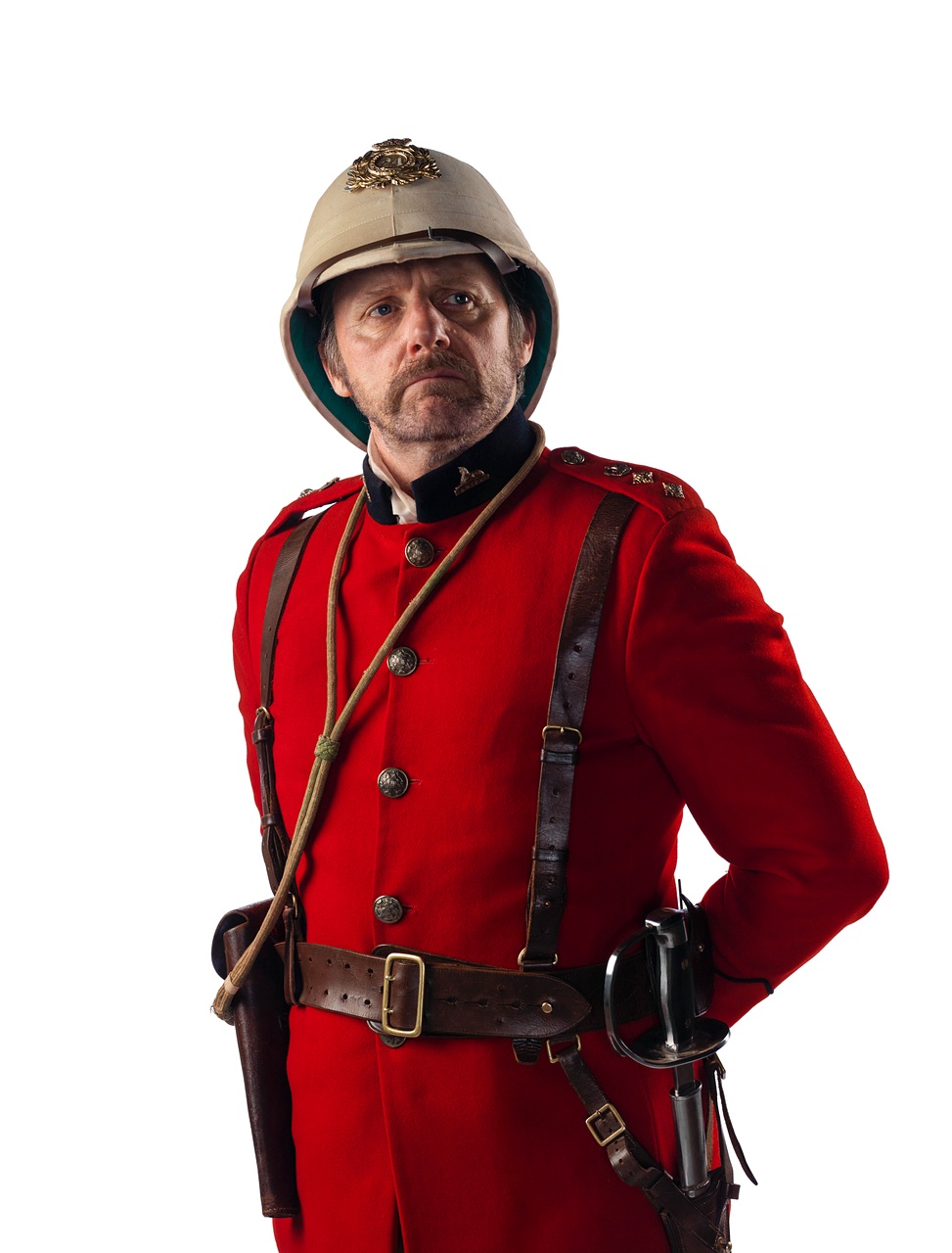
If you want to sum up the episode in the nutshell, the Doctor brooding in his cell that it's traditional for him at this point to say it's "too quiet" is it. This whole thing is a ritualized display with no real depth or point to it - bar, perhaps, pith-helmet British explorers were psychotic serial-killing racists who only lacked spacecraft to wage a cosmic war against all foreigners and grind any compassion or imagination into the dirt. Yet, hey, this is a one-episode-only story showing Bill meeting space monsters in Victorian times. It doesn't try to be anything else, and the awkward Nardole/Missy scenes simply restate why Gatiss would never even want to be showrunner. Ever since he perpetrated Invaders from Mars, this is a guy with no interest in other people's story arcs or long-running repercussions. Even though he would merely need to tardis.wiki Mars to fit his idea of Ice Warrior society with that established in the audios (which have been a really big part of the mythology by now, to stories even Moffat has heard), he won't.

It's far too much like hard work.

"Yeah, gotta admit the Martian Sphinx was not a good likeness..."

No wonder he went for this plot rather than trying to do a current-affairs-satire with a third Peladon story. That would need much more effort, research and serious analysis than someone who is still shocked folk were offended by his equity card joke (he's very sorry about it, but genuinely expected people to applaud).

All in all, I think I'd like a Mark Gatiss easy-going episode more if two-thirds of the series so far hadn't been trying to achieve the exact same thing

A radical paradigm-changing reinterpretation of basic Who concepts. (c) NOT Mark Gatiss

Oh, and Whovians - despite the undisputed awesomeness of Celia Pasqualia - was shite.

Monday, 5 June 2017

Doctor Who - Clickbait!

You can't please everyone. Anyone who says otherwise is lying, or using "alternative facts". Even so, surely fandom has reached the point where BBC policy to any reaction they make must be "Your opinions are inherently worthless, we gain nothing from your brief and fickle support, and you have done nothing to gain respect - in short, fuck off and die."

"You have an online forum. I have a gun. Who's opinion matters more right now?"


It's been a well-acknowledged good-natured paradox that the people who hate, despise and are most frustrated by Doctor Who are its fans, but this is just stupid. In 2012 Moffat tried to give them his most Moffaty-moffatness and everyone hated it. He backed up in 2013 and the fans hated it. He gave the fans what they wanted in 2014 and the public hated it. He tried to balance it out in 2015 and everyone hated it. Fans welcomed the idea that 2017 would be a clean slate appealing entirely to non-fan audiences, bringing in new viewers and restoring the show's standing in the public.

"Yeah, gritty realism, but my audience appreciation index is THIS big!"

But they hate it. They hate it's not dark and gritty and serious like it was in the days no one except them watched them. They hate the uplifting endings that kept normal people tuning in. They hate the lack of over-complicated mystery that drove away the public as much as they hate the spoon-fed lack of imagination that might keep them watching. You can sympathize up with a point that their favorite show has to whore itself out to the lowest common denominator to put food on the table, like a loving mother turned filthy prostitute to keep her children fed and clothed.

Up to a point, you can sympathize.

Up to a point.

And that point has been reached.

"I never liked you even when I tried to... I never liked you and I won't pretend to."


Sparacus, of course, sums it all up with his incisive review which is the most he's written in months:

3/10. Oh dear. It was all going so well. After two good monks episodes this one was ruined by the silly resolution with the Bill's mum nonsense. Emotional guff of the worst lazy writing kind. For me it ruined the whole trilogy of episodes. Lazy, emotional guff. The idea that Bill's love for her mum saves the world. Would shame even a hippy.

Pictured: A shamed hippy, yesterday


Apart from the idea that fascism can be defeated by unconditionally caring for reach other is "shameful", and the idea peace-loving alternative lifestyle people would be sickened at the idea of non-violent resolutions to situations, we have again the utter hypocrisy of this premise.

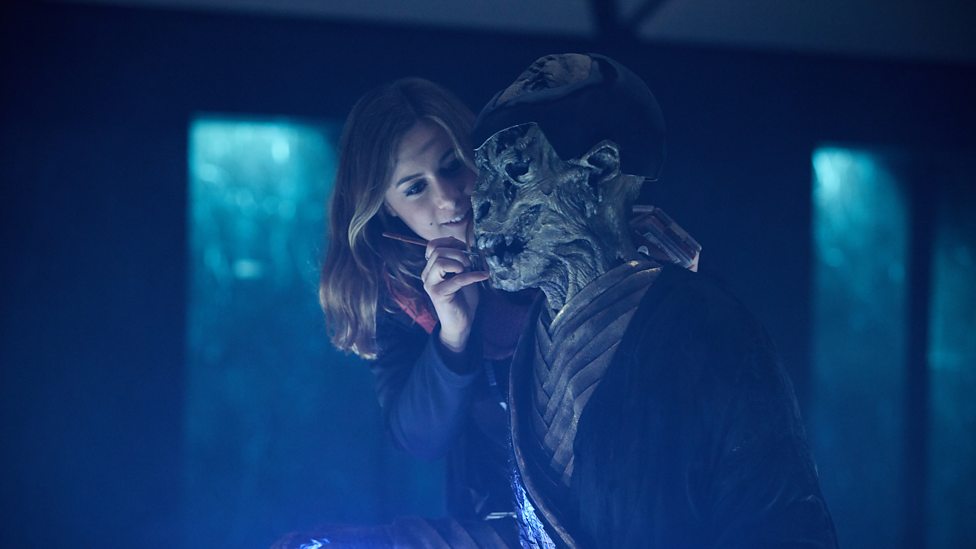
Twelve zombie monks with a brainwashing ray taking over a planet using zombie monk statues conveniently placed next to landmarks - perfectly logical and impressively realistic.

A woman's lifelong childhood fantasy of growing up with her mother briefly short-circuiting a brainwashing ray used by twelve monks to take over a planet - silly, lazy emotional guff.

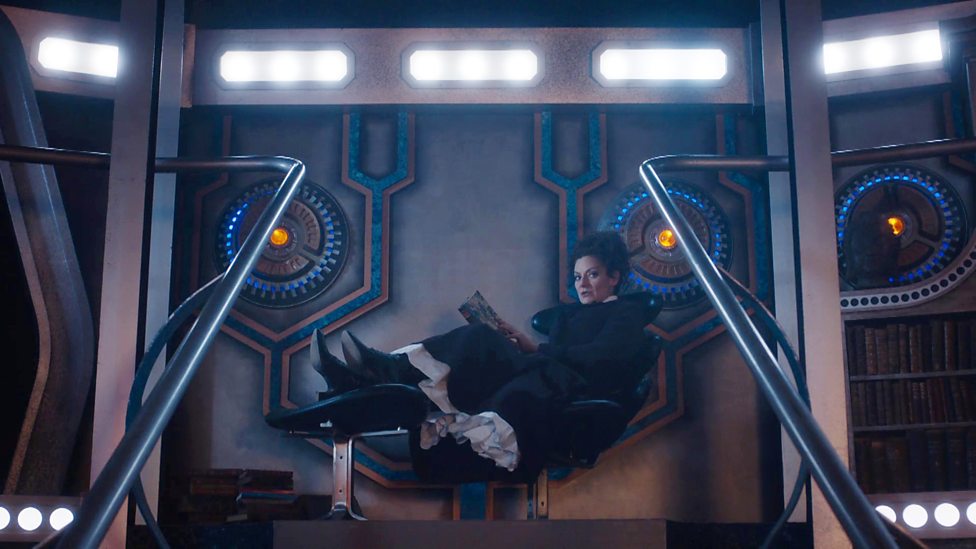
Missy tries to think of something nice to say about that. And fails.

Plus the evidence that sparacus will only comment on Doctor Who if he hates it. And not just spara, GallifreyBase is awash every week with people filled with bile for every second of screen-time, every line of dialogue, every special effect. Moffat summed it up with people whining that he'd "mess up" Bill - ie, a character who he created and plotted out in every detail would only work if... he did nothing with it.

It doesn't work like that. It is, to quote the climax to Farscape, all or nothing you bastards.

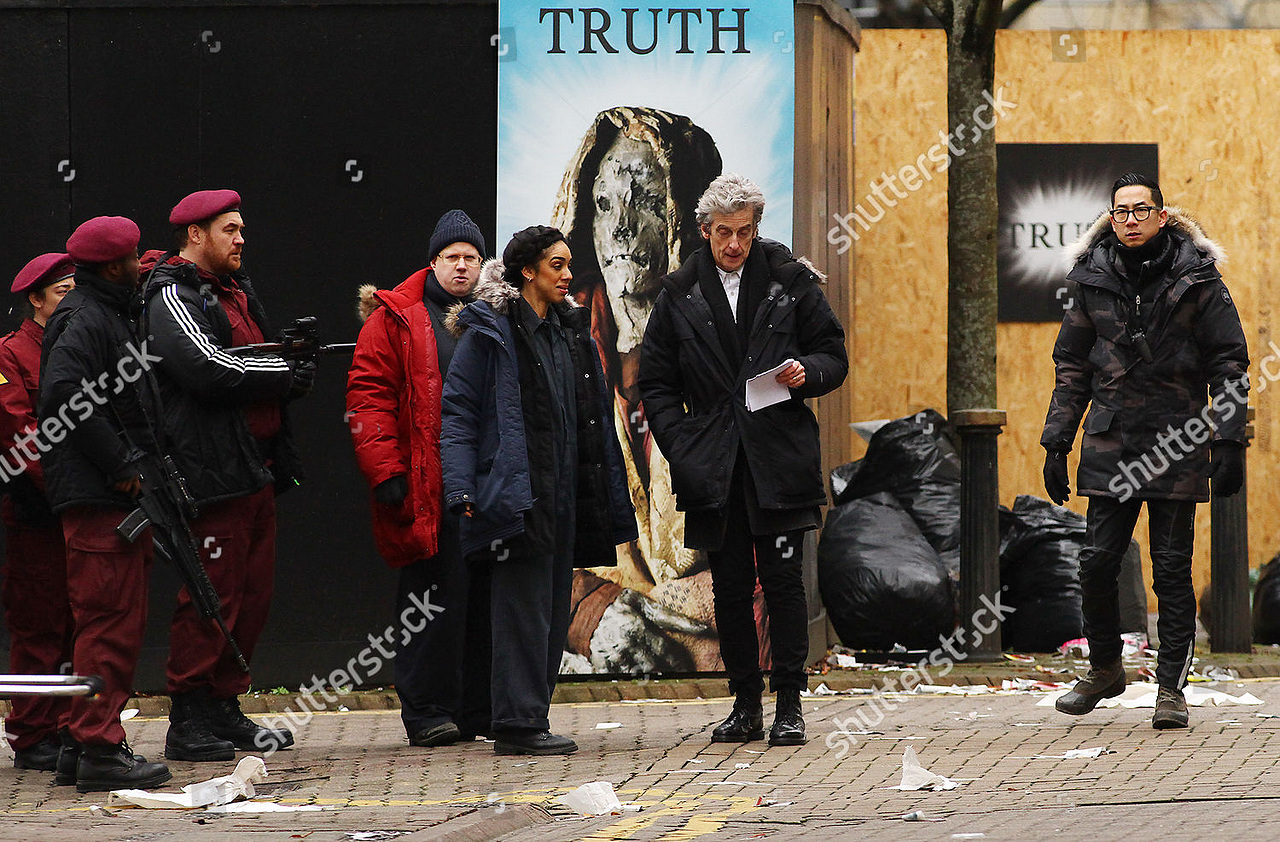
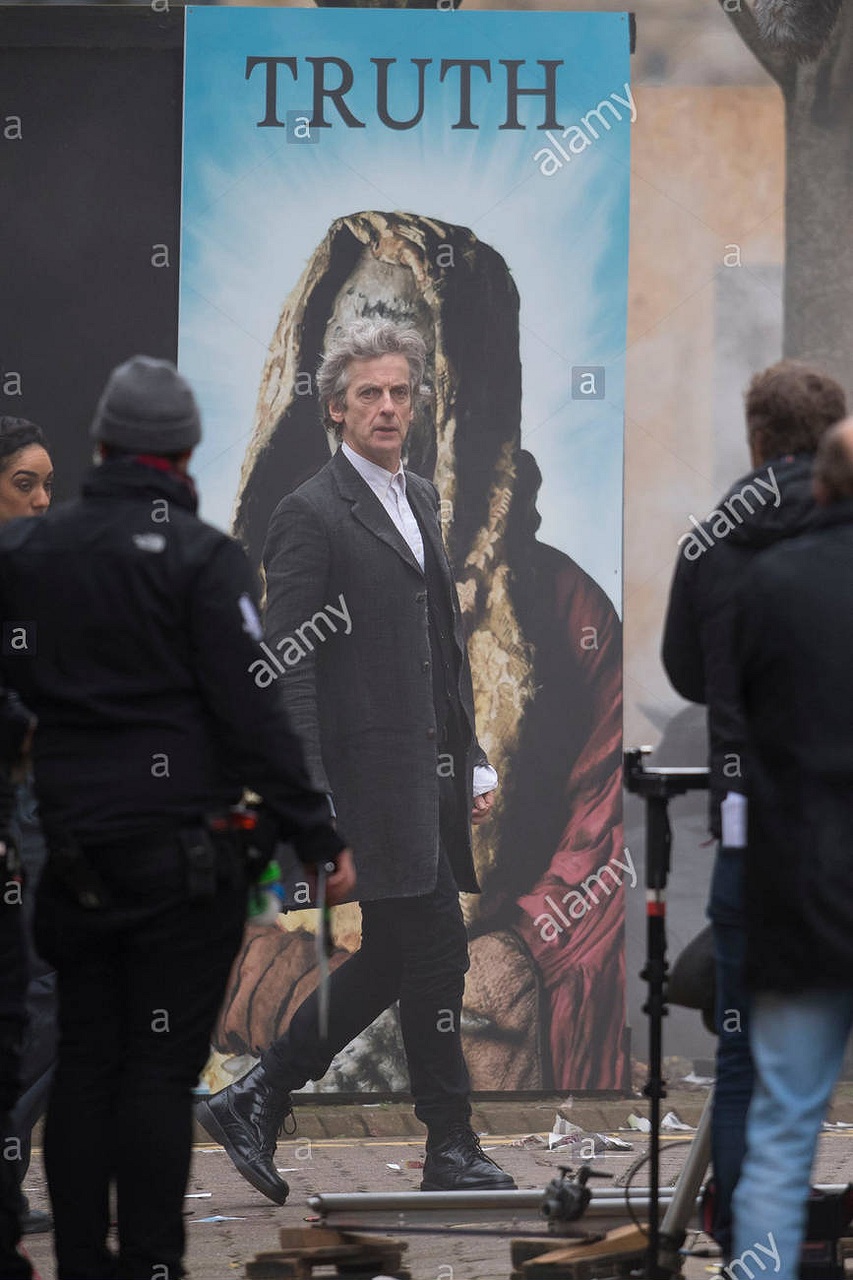
You can't handle the truth. Or the fact the poster in the middle is blowing you a kiss.


The eight previous episodes of Doctor Who have been a stone-cold success. The reviewers love it, the public love it, there is a general vibe of "oh, it's good again!" and a whole new generation of people are finally giving the show a chance to impress them and being impressed!

Looking at The Lie of the Land as one of those people who has to compare every last detail with everything else and list all the influences and derivative origins (like those degenerates behind "RecyclingWatch" who seem to believe that imagination ended in 2006) and you might very well whinge you've seen it all before. With monuments, six months of an invaded world by brainwashing undone, the Doctor captured by the villains and humiliated on television, black-clad black-skinned companion being arrested as part of a ruse before the power of love resets everything... that was Last of the Time Lords, wasn't it?

"Yes I'm feeling like the EIGHTH WONDER OF THE WORLD! Never, ever better! EIGHTH WONDER OF THE WORLD! And if you think I'm losing it, just pretend it's wonderful! So wake up, baby! EIGHTH WONDER OF THE WORLD!"

And then the Doctor sits down halfway through the episode and introduces Missy as "The Other Last of the Time Lords." Given he's never mentioned any "last of" to Bill in regards to his species, there can only be one reason for this line - a knowing wink to the audience, just like all those other winks through the years when as far back as Ian and Barbara they were expecting alien planets to be gravel quarries and to be mistaken for spies and/or murderers at every turn.

"There, there. So you're an inconsistently-characterized, easily-defeated villain. Look at how the Daleks and Cybermen did over their first three stories. You mark my words, you're way more successful than those Silence losers..."
The climax has the Doctor bitch human beings don't learn from their mistakes, tacitly implying that he does - and that can only work if he sees the patterns of past events about to recur. In short, yes, this is just like that thing with Martha and the Archangel Network all over again. The Doctor even turns to the Master to bluntly ask "OK, how would you deal with it now the shoe's on the other foot?"

The point is, therefore, that the character's reaction to the situation is the plot rather than the situation per se. Otherwise why wasn't Victoria screaming she was suffering deja vu through all those besieged bases and bumping into Yeti and crazed commanders every five minutes? Or Jo deciding to sleep in because it was obviously going to be the Master as DJ Retsam at the local disco? Or Bill deciding to leave the university because crazy shit keeps happening around the Doctor and people dying?

Big Finish has made a splash using the idea of remaking The Aztecs repeatedly, but replacing the titular Mexicans with some other historical scenario and Babs Wright with other companions. Yet do we complain that this moral dilemma/ideological schism is done over and sodding over again? No, because when it's Jamie ranting anti-English propaganda against the Doctor, or Leela siding with the Romans against the Britons or Erimem with her unique position where 90% of pure historicals are the far-distant future for her, are what the whole point is about! Capaldi's first episode had Donna and Pompeii fitted into the exact same mould to massive acclaim - and the ending also revolves around "guff" as Donna's love for the Doctor and for others lets them press the button and save Caecilius' family.

Come to think of it, bitching about the "power of love" seems downright bizarre. It's been in so many stories it's like watching CSI and complaining that they're investigating murders again, or that it's another bloody court case in Law and Order. The Doctor's entire raison d'tre is his love for others overriding the common sense to run back to the TARDIS and scarper.

She is ready to shoot the Doctor and then "beat the shit" out of Nardole. Fans of this family-friendly show are devastated when she doesn't. The general public wonder what the fuck is wrong with said fans and back away slowly.


The greatest ever story - officially - is Robert Holmes' The Caves of Androzani which is all about the power of love. Sharaz Jerk's undoubtedly powerful obsession with Peri destabilizes the stalemate of the Spectrox War, but its shown as hollow when our masked loon would rather throttle Morgus than tend to a dying girl. The Doctor, meanwhile, focuses on Peri at the cost of his own life because he loves her, and she and the rest of the companions love the Doctor and their love causes him to regenerate. There's no technobbable or anything like that. The Doctor does what he does for no other reason that love for Peri and regenerates for no other reason than the talking heads of people he loves bring him back to life.

"No! It's all about drugs and gun-running and grown up stuff like that! Love is soppy girl stuff and there's no way Robert Holmes would ever have used it as a dues ex machina! I DENY THIS REALITY! I - DENY - IT!!!!"


Compare to the following tale - officially the worst ever story - The Twin Dilemma. There is no power of love there. It's about a giant slug who kidnaps two children to make a sun explode. Who then dies when salt gets poured onto him. The Doctor's off his face throughout, all the characters are fanatical trigger-happy bastards and Peri doesn't even thank the Doctor for dying for her. It's also the story that historically killed the classic series and Moffat himself disowns it until Dragonfire which is another story about, get this, the power of love. The Seventh Doctor and Ace might be the most overwritten, screwed-up characters in the Whoniverse but they damn well love each other no matter what.

Since RTD brought the show back, "the power of love saves the day" ending has appeared in Rose, The Unquiet Dead, Aliens of London, Dalek, Father's Day, The Empty Child, The Parting of the Ways, School Reunion, The Girl in the Fireplace, Rise of the Cybermen, The Satan Pit, Love & Monsters, Doomsday, Gridlock, Evolution of the Daleks, 42, Human Nature, Last of the Time Lords, The Fires of Pompeii, Planet of the Ood, The Doctor's Daughter, The Unicorn and the Wasp, Silence in the Library, Midnight, Turn Left, Journey's End, The Next Doctor, The Water of Mars, The End of Time, The Beast Below, Victory of the Daleks, The Vampires of Venice, Amy's Choice, Vincent and the Doctor, The Lodger, The Pandorica Opens, A Christmas Carol, The Curse of the Black Spot, The Doctor's Wife, The Almost People, Let's Kill Hitler, Night Terrors, The Girl Who Waited, Closing Time, The Wedding of River Song, TDTWATW, Asylum of the Daleks, A Town Called Mercy, The Angels Take Manhattan, The Snowmen, The Rings of Akhaten, Cold War, Hide, The Crimson Horror, Nightmare in Silver, The Name of the Doctor, The Day of the Doctor, The Time of the Doctor, Time Heist, The Caretaker, Kill the Moon, In The Forest of the Night, Death in Heaven, Last Christmas, Before the Flood, The Woman Who Lived, The Zygon Invasion, Face the Raven, Heaven Sent, Hell-Bent, The Husbands of River Song, The Return of Doctor Mysterio, The Pilot, Thin Ice, Knock Knock, The Pyramid at the End of the World and now The Lie of the Land.

That's a lot of episodes. More than the "bigger on the inside" joke, really. Complaining about it is as bewildering as complaining they use Ron Grainer's melody every week, when you think about it.

"A brainwashing parallel-timeline amnesia-zombie alien invasion?" "Must be Saturday..."


So let us look at The Lie of the Land as NEW, NORMAL PEOPLE would see it. We see the world invaded using fake news and propaganda, the buzz words and excuses of Donald Trump (who is getting more of a thrashing in the last two episodes than Thatcher got in a decade of Classic Who) used to tear families apart and justify mob attacks. A whole story about the danger of not thinking for yourself and taking everything on trust, but also Bill having to take responsibility for her actions when a moment of weakness and compassion leads to disaster, proving good intention pave the road to hell. The Doctor reverts to his asshole persona as he derides mankind for going backwards, before showing his absolute desperation not to take the "easy" route of sacrificing lives for the greater good. Yes, the Doctor's fake regeneration was just stuff that looked good in the trailers, but it was as justified as the same stunt in The Impossible Astronaut if not Journey's End (if the monks had been spying on the test, they would have expected the pixie dust explosion) but given a new audience needs to get used to the idea the Doctor will change his face at Christmas, this dry-run would be a fascinating bit of foreshadowing.

"PSYCHE! Seriously, you people can't keep falling for this! I've been pulling this stunt since 2008! The handy-hand, Jackson Lake, the Impossible Astronaut, the false start hiccup on Trenzalore, letting Davros steal all my mojo, Ollistra's sex-change... you morons just refuse to learn from history, don't you?"

Toby Whithouse refuses some themes from Being Human (fair enough) as we get cabals of media-manipulating bastards "enforcing worship in city-sized churches", justifying carnage with the Romans, the refusal to save the day by killing an innocent girl, villains starting to crumble at the return of their conscience, as well as a trio of dour-bastard-chubby-nerd-happy-black-girl go on the run from a world turned against them. And the subliminal flashes are just like The God Complex. Is that bad that I recognized this? Is the episode totally devoid of worth since I spot a similarity?

Of course not. In fact, the conclusion to this trilogy takes some of the roughness off three separate episodes that were clearly not written to be a single story. It's impossible to reconcile the sadistic gamers of Extremis with the master-tacticians of TPATEOTW who here are so utterly arrogant they've never once tried to analyze one of their defeats despite being so anal they even told their simulations they were simulations just to see what happened. No doubt that Lie of the Land been a standalone episode, the first fifteen minutes would have had a totally different beginning before the fake-out-regeneration-test business. Either way, the trilogy's purpose to shake up the established format (where Bill is totally clueless about the vault, Missy and Nardole) to a new one (where Missy's redemption and outside threats to the world) is set up.

"No, this is not just Sherlock's evil little sister routine all over again! How very dare you!"


While I'm not really impressed with the Truth Monks, I am interested in the way they're the first villains since the Master to get a full three consecutive weeks dominating the storyline and thus a unique chance to get into the public consciousness. Daleks, Cybermen, Sontarans, Weeping Angels, Silence... none ever got more than two weeks in a row to dominate the show. Emojibots and David Suchet might have been more awesome, but they were there and gone in a flash.

We actually might have a new "giant maggot" where in the future online chatrooms with drunks fondly recall "the one with the zombie monks and fake news" and speak nostalgically of all those classics where Bill was clit-blocked by various high-ranking officials and the Doctor was blind. Of course, that was back in the proper series before Hayley Attwell took over and they did all those stupid interactive choose-your-perspective episodes with 3D printers attached. Oh, what has happened to the magic of Doctor Who?!

"You look better - I look better - they look better - we look better in the dark..."

In summary, this could have been better but it could also have been much worse. It has also demonstrated just how insular and toxic fandom (well, the most vocal and critical bits of fandom) have become. Like Mad Larry's Radio Thymes website where he gave a detailed list for why he hated every single TV show on television, they've finally run out of oxygen for fuel. I'm reminded of The Silver Chair, as Puddleglum deals with the Green Lady's "is this real or a dream" trap by arguing that he'll go for the one he likes and makes him happy rather than trying to waste time justifying his decision.

If you don't have time for fun Doctor Who with happy endings and the power of love, just what do you have to offer instead? What's so good about this idealized version of the show reality keeps depriving you of? And what a miserable bunch of assholes you are. I'm glad I don't sit on the couch next to you when it's on.

Especially you lot whining about the ratings. Yeah, you. You suck.

(Though it's a pity the Doctor didn't list Autons as well as the other monsters, as we would have had flashback clips to the Ninth Doctor as well as the Tenth, Eleventh and Twelfth...)

Um, this appears to be the poster this week. I have no comment.

Meanwhile... Whovians continues to not-get-even-worse with the lack of Bargo but the guests seem to have little to no understanding of what they're actually watching and ask all sorts of bewildering questions that show they're not paying attention to anything they're seeing. It's stopped being offensive to being... well, totally bleeding irrelevant. I mean, it doesn't even merit hatred nowadays. With all their obsessing over a story arc repeatedly thrown in their face, the whole thing is a complete waste of time.

Sorry. It just is.

Friday, 2 June 2017

Doctor Who - The Agony of Choice

Of course, for all my complaints last week the idea that Steven Moffat would come up with a story completely irrelevant to the ongoing story-arc was never going to happen. The Pyramid At The End of The World (presumably next to the City at the Edge of the World, just between the City at the Edge of Forever and The Restaurant at the End of the Universe) makes it clear from the outside that Extremis definitely did happen and it does this by Bill ripping the shit out of the cliched plot in an attempt to get between the dimpled knees of a chick called Penny. Inspector Gadget fans will already be sympathizing.

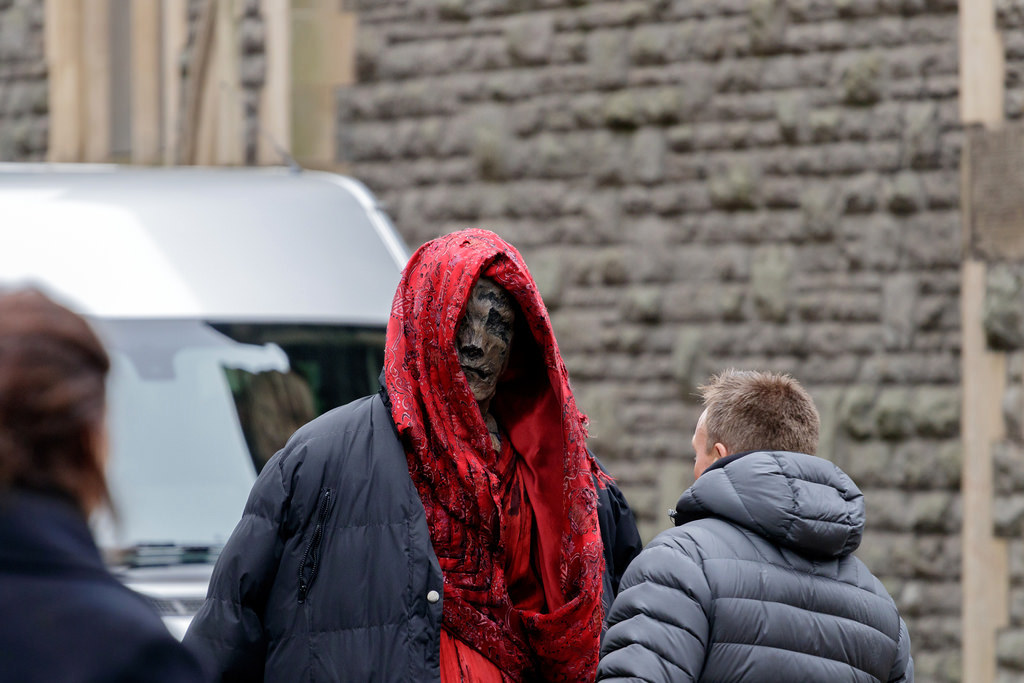
And Bill dismisses it as a completely incoherent, laughable collection of shock moments without rhyme or reason. It gives Nardole and the Doctor some dramatic short-cut in the plot that follows, but I doubt the first draft of the episode suffered particularly badly without this. Of course the mummified monks in their pyramid spaceship were up to something dodgy, and they cheerfully explain their 'predictive text technology' with such ease, Extremis really wasn't necessary. Only Bill's tale of her simulated self's encounter with the Pope, and its counterpart in reality with the secretary general of the UN, really justifies it.

Pull at a plot thread and see all the credibility unravel...

Still, rather like the ongoing plot of the Doctor being blind, these are elements that have been added to a story to enhance it - even though it probably coped just as well without it. The climax with the Doctor trapped in a poison-filled quarantine bay, echoing so much Tennant's "death" scene in The End of Time, would have worked just as well without the "Ah, yes, can't see the buttons to escape" caveat. That said, having his martyr complex and controlling tendencies keeping Bill in the dark about this add to the tragedy of the climax, so we're no worse off with it.

The whole thing can be summarized in the wonderful character of lab tech girl Erica. She's a dwarf. There is nothing in the story that requires her to be a dwarf. No one mentions it. There's a good-to-better chance the character was scripted as someone of more normal proportions. At no point does her body-size effect the plot (compare to Warwick Davis in Nightmare in Silver who was still considered a bit of a freak in the society of 250000AD for not being tall) in any way. Well, that shot of her walking through the labs seems to cry out for Steven Fry screaming "GET! THAT! ARSE!" but nope, she's just an average human being. You can't help but be glad they cast a little person for being a brilliant actress rather than being little.

Thus, The Pyramid at the End of the World is enhanced by these "needless" additions. Certainly the Truth Monks are improved this week by having the audience actually comment on them. Last week, we were just supposed to be scared of the poorly-dubbed skull-faced monsters because they were ugly and sinister. This week, they actually earn some credibility as they burn to dust those that fail their standards, and even their generic appearance is actually a calculated insult to those who look upon them. Last week, we weren't asked to think anything beyond 'They're ugly and evil!' but this week, they are intimidating because we don't know what their motives or plans are. Peter Harness portrays the monks as a mystery, whereas Moffat used them as a jump scare - and probably mapped out Extremis long before the idea of an ongoing story arc to justify the monsters ever occurred to him.

The focus group insisted this would appeal more to humanity than those whores of Axos...


Not to say Harness gets off scott free, of course. As always, he has to offer us something with a credibility-destroying plot hole that makes it really hard to accept the story on its own terms. Yes, we can grin and face the idea the moon is a giant egg full of spider bacteria, but the idea mankind has waited ten years to do anything about it? OK, the Zygons might be able to telepathically snatch out disguises to intimidate enemies like a polymorph or siren, but that a whole platoon of UNIT troops happily walk into an obvious trap without even one of them staying outside just to be on the safe side?

This time, it's Erica's idiot lab assistant. Yes, it's all about random factors and chaos theory. Yes, it's clear a crucial hangover and broken pair of glasses means he's in the right place and right time to unwittingly create life-destroying bacteria that will sterilize the globe. Yes, he's dumb enough to take his helmet off.

Behold, the dickhead who destroys all life on Earth. And his breath stinks!

But then, upon seeing he has created a biblical plague right of Steven King's The Strand, he... doesn't put his helmet back on. He grabs a sample of poisoned soil and holds it in front of his face. Then he takes it past not one but two quarantine airlocks without even trying to close the doors behind him... The worst thing is, the plot insists he's just doing this by accident rather than, say, being a sleeper agent for the Monks. Pity.

As this is ostensibly the middle part of a trilogy, it can't really be reviewed. Certainly, it's easy to imagine TPATEOTW as a standalone story with the opportunist aliens defeated by the Doctor purging the virus at the end in a metatextual mockery of Children of Earth (with Peter Capaldi saving the day rather that committing murder-suicide in total despair) and you can easily see that this, and Extremis before it, have been slaved to the actual Monk extravaganza in next week's episode rather than the other way round.

"Bill, Nardole, you're both being very quiet today... Hello?"

So, er...

I'll just fill up bandwidth with a discussion of the uncanny similarities between Sylvester McCoy era Who and Inspector Gadget. Curiously, they were both broadcast one after the other every weekday during my distant youth and to this day part of me feels a bit of whiplash watching a whole Seventh Doctor adventure without alternating with the immensely popular French-American cartoon.

Recent catastrophic events lead me to watch IG again out of pure nostalgia and was impressed to find them no worse than the ones I loved during my youth. Certainly, it's amazing how much my memory of plots faded but the music didn't (I can still do a fake Inca war chant I hadn't heard since 1989 on request) and the beautiful painted artwork still stands up today. Yeah, so, it's a silly kids cartoon - big deal. Even as a toddler I was aware of the differences between Gadget fighting MAD and Bob Craven in Edge of Darkness and knowingly chose the former.

Now, the premise of IG is pretty simple. Gadget is a cross between Max Smart, the bloke from the Pink Panther films and the Terminator - a dedicated but moronic police detective with a frightening range of multipurpose tools that rarely work. He takes on an organized terrorist group and defeats them mainly because of his super intelligent niece and GM dog Brains. Every episode starts with Gadget getting a ridiculously-specific tip off that MAD is up to something, goes to an exotic locale and manages to get completely the wrong end of the stick while Penny and Brains defeat the bad guys, call in the cops and indulge in incredible amounts of computer hacking given it was made in 1982. The evil leader of MAD, the unseen Dr. Claw, gets away vowing revenge and the last minute is some general public service advice and sight gags showing it's a miracle Gadget hasn't killed himself in general ineptitude.

Yet, IG still rings true to my heart as the McCoy era does even though there's certainly next to no subtext to be rewarded in deeper readings. And yet... I realize now that they were basically the same show. Gadget looks like a tall, less question-marked version of the Seventh Doctor (invariably he uses an umbrella once an episode) and is a cheerful, gormless tourist who fights bad guys. The difference is the Doctor pretends to be a moron, and Gadget doesn't - but everyone assumes he is because he's trying to fool his enemies.

Looking back at it, the Seventh Doctor and Gadget could be interchangeable. His first story, blundering around Lakertya, assuming enemies are friends and visa versa, constantly trying to escape and putting himself in more danger, upsetting plans by accident and falling for countless tricks from obvious bad guys. The running around corridors back and forth, being mistaken for the wrong person and visa versa and trying to rationalize the bizarre actions of those around him (like the end of part one of Paradise Towers) interspersed with funny slapstick. The car chases in Wales or on Terra Alpha or in Cadbury, the jokes of being left notes and instructions in bizarre places, the dynamic of him and his companion having wildly-separate adventures and at times IQs...

Mel and Ace work as Penny/Brain as well. They're both young, precocious ladies who try to keep the Doctor from being sidetracked, show moral outrage, discover secret passages, get attacked by monsters and invariably save the day with well-timed explosions and/or hacking. Ace's desperation to get the Doctor to treat the Psychic Circus as dangerous is the perennial B-plot of IG played absolutely dead straight. Mel nearly being eaten by cannibals or Ace locked up with killer Victorians is just the sort of constant traumatic terrors Penny goes through each episode, though she generally just runs away instead of giving them lip.

And the villains, too, bare a shocking similarity to Gadget's rogues gallery. Dr. Claw sits in a scary castle somewhere watching his enemy on TV screens and screaming at incompetent sidekicks to deal with the main character, snarling and thumping the table when things go wrong.

"Hello there, Kroagnon. This is the Doctor speaking - no doubt you've heard of me..."

Just like the Rani on Lakertya, able to turn on scanners to watch Urak chasing Mel through a quarry. Or the Chief Caretaker sending the cleaners after the Doctor (Kroagnon's Claw-like voice and roars when the Doctor grins from a TV screen are particularly familiar.) Even Gavrok, smashing a speaker and hiring a swarthy mercenary to infiltrate the Doctor and kill him follows the pattern, while Kane watching the Doctor and Glitz trying to chase the fire-breathing dragon in a dark labyrinth as Ace and Mel chase after them is enough to make me uncertain what I'm watching. But it doesn't end there - the growling not-Davros Dalek in Ratcliffe's shed giving ominous instructions to the nazis while never turning around to show its face, Helen A ordering the Kandyman and the Happiness Patrol from her office, Morgaine gazing into her crystal ball as she sends in the troops, or the Master watching through a kitling. Cut sequences from Ghost Light would show Josiah sitting in the dark using security cameras to spy on the Doctor and Ace as they move through his haunted house full of craziness just like The Haunted Castle of IG fame.

"I'll get you next time, Gadget... NEXT TIMMEEEEE!!!"


Other elements of the episodes blur together. Remembrance of the Daleks and All That Glitters both involve the villains chasing after a totally useless resource without realizing it, and the hero spends most of the story trying to stop innocent civilians being caught in the traps he's laid for the bad guys before Skaro is destroyed/the Incan city is destroyed by a boobytrap. MAD and Cybermen are obsessed with gold to an unnerving degree. Pirate Island is basically Delta and the Bannerman relocated from Shangri-La to, uh, well a desert island with pirates, even down to the bewildered tourists and bombs blowing up civilian vessels. A high-rise holiday resort is turned into a trap-filled dungeon full of incompetent managers with killing machines traveling through lifts, intending to wipe out all the unwanted visitors thanks to a basement dwelling villain screaming a two-syllable word over and over again...

Yeah. Inspector Gadget. It rocks.

Oh, and it was going so well too. That's rubbish that is. The tagline doesn't even make sense!
Meanwhile, Bargo was removed from Whovians, making it 49% less offensively annoying than before. Rove's missus replaced him and proved to be as equally conspiracy-obsessed and bewildering as Adam Richards (her idea that the Monks are members of the Silence who have changed absolutely everything about them so they're actually nothing like the Silence is almost as bewildering as her decision to declare live on television she would rather have sex with a midget brain-damaged genderless clone rather than her husband - seriously, Rove, your wife finds Strax more attractive than you? Dude...). That said, it's agonizingly clear they just don't have anything like enough material planned per episode and are forced to rely on people finding the panel funny.

Which, you know, is never an even bet.